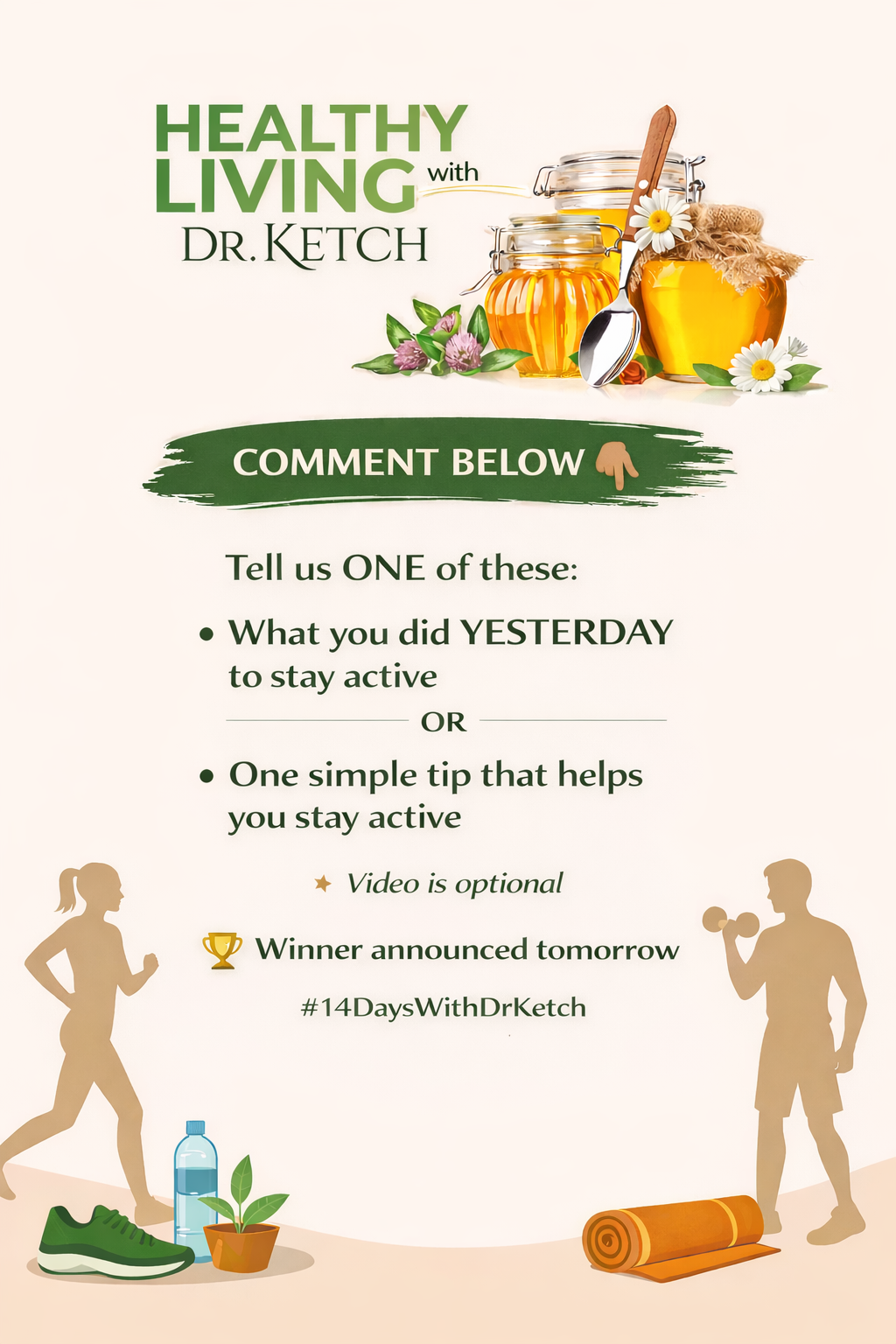
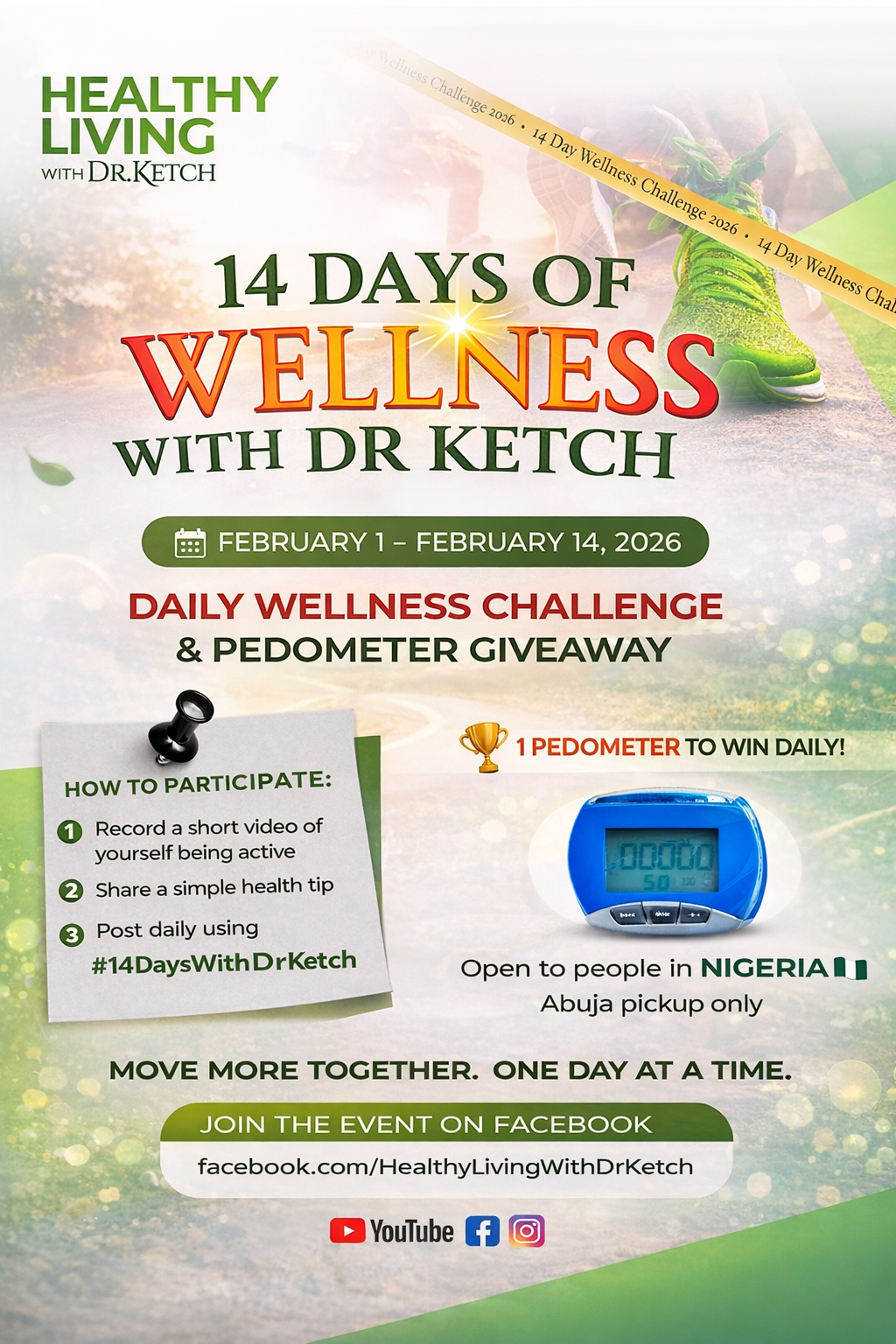
As part of the 14 Days of Wellness with Dr Ketch, we are excited to announce our Day 2 pedometer winner.
Watch the short video below to see the announcement and learn how participants are taking simple steps to stay active each day.
The wellness challenge continues daily, with more opportunities to participate and win. Whether it’s a short walk or household activity, every small effort counts.
Q: I’ve got a newborn turning 2weeks today. He’s been having running tummy yellow with somethings like white cheese. Is it normal. I am starting to get worried now. Another thing is that my stomach is been a little bit sore and its making noise(gas),n this is happening to the baby. Must I stop breastfeeding or what. Confused mum. Thanks
A: Dear mum. Congratulations on your newborn, and thank you for writing in. I understand why you’re worried, but let me reassure you
First, let’s talk about your baby’s stool.
In newborns, especially those who are breastfed, it is completely normal to have frequent, runny yellow stools. The stool may also contain small whitish or seed-like particles, which many mums describe as looking like “white cheese.” This is normal and is simply undigested milk fat. It is not diarrhea and is not harmful.
Now about the tummy noises.
Babies’ tummies naturally make grumbling, gurgling sounds throughout the day. These sounds are caused by the intestines working, moving milk, air, and digestive contents along. You may notice the sounds more before feeding or shortly after feeding, and that is perfectly normal.
It’s also common for babies to swallow some air while feeding, which can lead to gas and more tummy sounds. Some foods can also increase gas, but this does not mean you should stop breastfeeding.
You mentioned that your own stomach is sore and gassy. Please know that a baby’s tummy noises are not caused by your stomach making noise, and this is not a reason to stop breastfeeding. Breast milk is still the best food for your baby.
As long as your baby:
Is feeding well
Is active and alert
Is not vomiting persistently
Does not seem to be in severe pain
then there is usually no cause for concern.
However, if you notice:
Blood or mucus in the stool
Persistent vomiting
Fever
Severe abdominal distension
Poor feeding or lethargy
please take your baby to see a doctor promptly.
And even in the absence of these external signs, whenever in doubt, it is always okay to ask and to seek medical advice. You’re doing well, mum.
It’s a simple, fun challenge to encourage daily movement and healthier habits. The focus is on being active in everyday life, not perfection or intense workouts.
2. Who can participate?
The challenge is open to people living in Nigeria. Winners must be able to (or send someone to) pick up prizes in Abuja.
3. How do I participate?
Participation is easy:
Stay active in any way that suits your day
Share one tip on how you stayed active or how you usually stay active
Welcome to Day 1 of the 14 Days of Wellness with Dr Ketch
Here’s your mission for Day 1
✅ Do any form of physical activity ✅ Record a short video (10–60 seconds is perfect) ✅ Share one simple tip you use to stay active ✅ Post using #14DaysWithDrKetch ✅ Follow this page on the platform you’re posting from
That’s it!
You can:
Walk your street Dance in your room Clean with energy Take the stairs Stretch Play with your children Gym people – yes, you count too! 🙂
No excuses! 🙂
One winner will be announced tomorrow for Day 1! Winner gets a pedometer Open to people in Nigeria Prize pickup in Abuja
Post your video and tag us with #14DaysWithDrKetch
The 14 Days of Wellness with Dr Ketch kicks off in less than 24 hours!
If you’ve been meaning to move your body more, start fresh this year, or just have fun while getting active, this is for you!
Here’s how it works: ✅ Share a short video of yourself being active ✅ Tell us one simple tip you use to stay active daily ✅ Post using #14DaysWithDrKetch ✅ Follow the page on the platform you’re posting from
That’s it.
No gym required. No fancy equipment. No perfection needed. Dance at home. Walk your street. Clean with energy. Play with your kids. Stretch. Skip. Climb stairs.
Movement counts.
One winner will be announced every single day Each winner gets a pedometer Open to people in Nigeria Winners must be able to (or send someone to) pick up prizes in Abuja
Set your reminder. Charge your phone. Get ready to press record 🙂
Let’s start 2026 the healthy way – one step at a time
Q: Its a second week my breast are irritating when evening come
A: Breast pain can present in different ways. Some women describe it as a burning or stabbing pain, while others experience soreness, tenderness, or a feeling of heaviness or irritation in the breasts. The pain is often felt on the outer part of the breast and may extend to the underarms and sometimes even down the arms.
The good news is that breast pain is very common and is usually not a sign of breast cancer.
Breast pain can be grouped into two main types: 1. Cyclical breast pain. This type is related to the menstrual cycle. It usually occurs around the same time every month. Often starts 2–3 days before menstruation. Improves or disappears after the period begins. The intensity may vary from month to month. This pain is mainly due to hormonal changes in the body. For this reason, women who are on hormone replacement therapy after menopause may also experience similar breast discomfort.
2. Non-cyclical breast pain: This pain is not linked to the menstrual cycle and may occur at any time. Possible causes include: Mastitis, a painful breast infection commonly seen during breastfeeding Breast abscess, which is a collection of pus in the breast Non-cancerous breast lumps Certain medications
When should you see a doctor? It is important to have your breasts checked if: The pain lasts continuously for more than a few weeks The pain is getting worse The pain interferes with daily activities The pain is located in one specific area of the breast You notice a lump, nipple discharge, redness, or skin changes
Your doctor may recommend tests such as: A clinical breast examination Breast ultrasound Mammogram Breast biopsy (if necessary)
These tests help determine the exact cause and guide proper treatment.
So, in summary, breast pain is common, often hormonal, and usually not dangerous but persistent or unusual pain should always be evaluated by a doctor.
Welcome, Family! 💚 I’m so excited to officially kick off the 14 Days of Wellness with Dr Ketch challenge — a simple, fun way for us to move more, reconnect with our bodies, and start the year intentionally.
This challenge is about movement, consistency, and community — not perfection.
Here’s exactly how it works 👇🏽
✅ WHO CAN PARTICIPATE?
• Open to people living in Nigeria • Participants must be able to pick up prizes in Abuja • All ages are welcome • No gym membership required
You don’t need fancy equipment — just your body and a willingness to move.
🏃🏽♀️ WHAT COUNTS AS ACTIVITY?
Any safe, decent, everyday physical activity counts, including:
• Walking in your neighbourhood • Dancing at home • Cleaning the house energetically • Playing with your children • Skipping rope • Taking the stairs • Stretching • Gym workouts (yes — gym activities qualify too!)
If it gets your body moving, it counts.
🎥 HOW TO PARTICIPATE (VERY IMPORTANT)
To join the challenge:
1️⃣ Record a short video
Show yourself being physically active that day.
2️⃣ Share a simple health tip
Tell us one thing you do to stay active daily.
It can be something small — wellness doesn’t have to be complicated.
3️⃣ Post the video on your own social media page
Please do not post in my comment section.
Post on your personal page so others can be inspired too.
3️⃣ To qualify, please follow Dr Ketch on the same platform where you’re posting your entry, so we can see your video and contact you if you win. That is:
Posts without the hashtag cannot be tracked and will not be considered.
You may also tag @Healthy Living with Dr Ketch (optional but helpful).
🎁 DAILY WINNERS
• One winner will be selected every day for 14 days • Winners will be chosen across all platforms: – Facebook – Instagram – YouTube – Website
• Each daily winner receives one pedometer to support their wellness journey.
Winners will be announced daily on my social media platforms.
⚠️ PLEASE NOTE
• Winners are selected at Dr Ketch’s discretion • Inappropriate, unsafe, or indecent content will be disqualified • The focus is on effort, creativity, and consistency, not perfection
This challenge is meant to be fun, motivating, and inclusive.
💚 LET’S MOVE — TOGETHER
Wellness doesn’t start in the gym. It starts with small daily choices.
Move your body. Share your tip. Inspire someone else.
Let’s make movement a lifestyle — one day at a time.
Q: Good day ma, pls I need drugs and injection to prevent miscarriage. I have been having miscarriages. Pls ma’am, help me.
A: Hello Sweetheart, thanks for writing in. I’m truly sorry for your losses. Losing a pregnancy is very painful, and I want you to know that you are not alone and this is not your fault. Many women who experience miscarriages worry that they need special drugs or injections to prevent it.
However, the truth is that there is no single drug or injection that can automatically stop a miscarriage, especially in early pregnancy. In fact, most miscarriages happen because of factors beyond a woman’s control.
During the first three months of pregnancy (what we call the first trimester), miscarriages are most commonly due to problems with the baby itself.
These may include problems with the baby’s chromosomes (too many or too few genetic materials), a damaged egg or sperm, problems with the placenta (which is the organ that supplies nutrients to the baby), when the placenta or chromosomes are not functioning well – any of these may affect the pregnancy causing it not to be able to continue and nothing the mother did caused it.
Other factors that can increase the risk include smoking or alcohol use, drug abuse, poor nutrition, being overweight or severely underweight, advanced maternal age, severe physical stress or trauma.
Please do not blame yourself. If you are planning to try again, here are important steps that can help prepare your body:
Have regular unprotected intercourse at least three times a week, allowing proper ejaculation
Start folic acid supplements early, even before pregnancy, as this supports early baby development
Eat balanced meals and maintain a healthy weight Avoid smoking, alcohol, and unprescribed drugs
Once you become pregnant again, it is very important to: Register for antenatal care as early as possible Attend all clinic appointments consistently
Follow medical advice closely
If miscarriages keep happening repeatedly, your doctor may recommend further tests to look for underlying causes and guide treatment properly.
Please be encouraged. Many women who have had miscarriages go on to have healthy pregnancies.
Wishing you healing, peace, strength, and a successful journey ahead.