
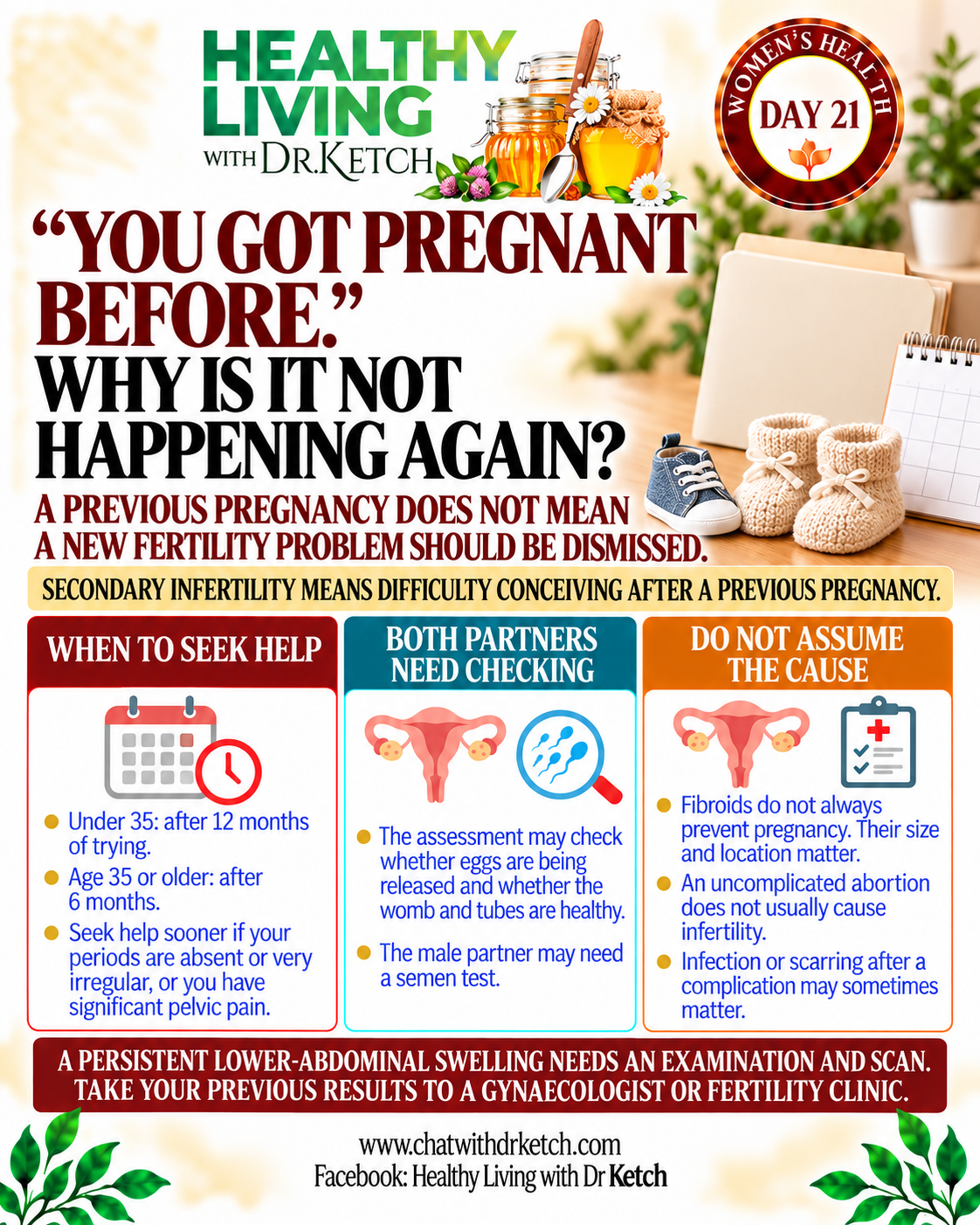
“But you already have one child.”
People may say this to comfort you. After months of negative pregnancy tests, it can make you feel as though you have no right to be worried.
You do.
Difficulty becoming pregnant after a previous pregnancy is called secondary infertility. That previous pregnancy does not have to have ended in the birth of a child.
If you are under 35, arrange an evaluation after 12 months of regular unprotected sex without pregnancy. From age 35, seek help after six months. Seek help sooner if your periods are absent or very irregular, you have significant pelvic pain, or you already know of a condition that may affect fertility.
Both partners should be assessed. The woman may need checks to see whether she is releasing eggs and whether her womb and fallopian tubes are healthy. Her partner may need a semen test.
Do not assume fibroids are responsible simply because they appeared on a scan. Many women with fibroids become pregnant. Whether a fibroid affects fertility depends on its size and where it is growing.
An uncomplicated abortion does not usually cause infertility. Infection or scarring after a complication can sometimes affect fertility, but this needs proper investigation.
A persistent swelling in the lower abdomen also needs an examination and scan.
If you have moved from one hospital to another, gather your previous results and take them to one gynaecologist or fertility clinic for a coordinated review.
You deserve a proper assessment, even if you have been pregnant before.


