
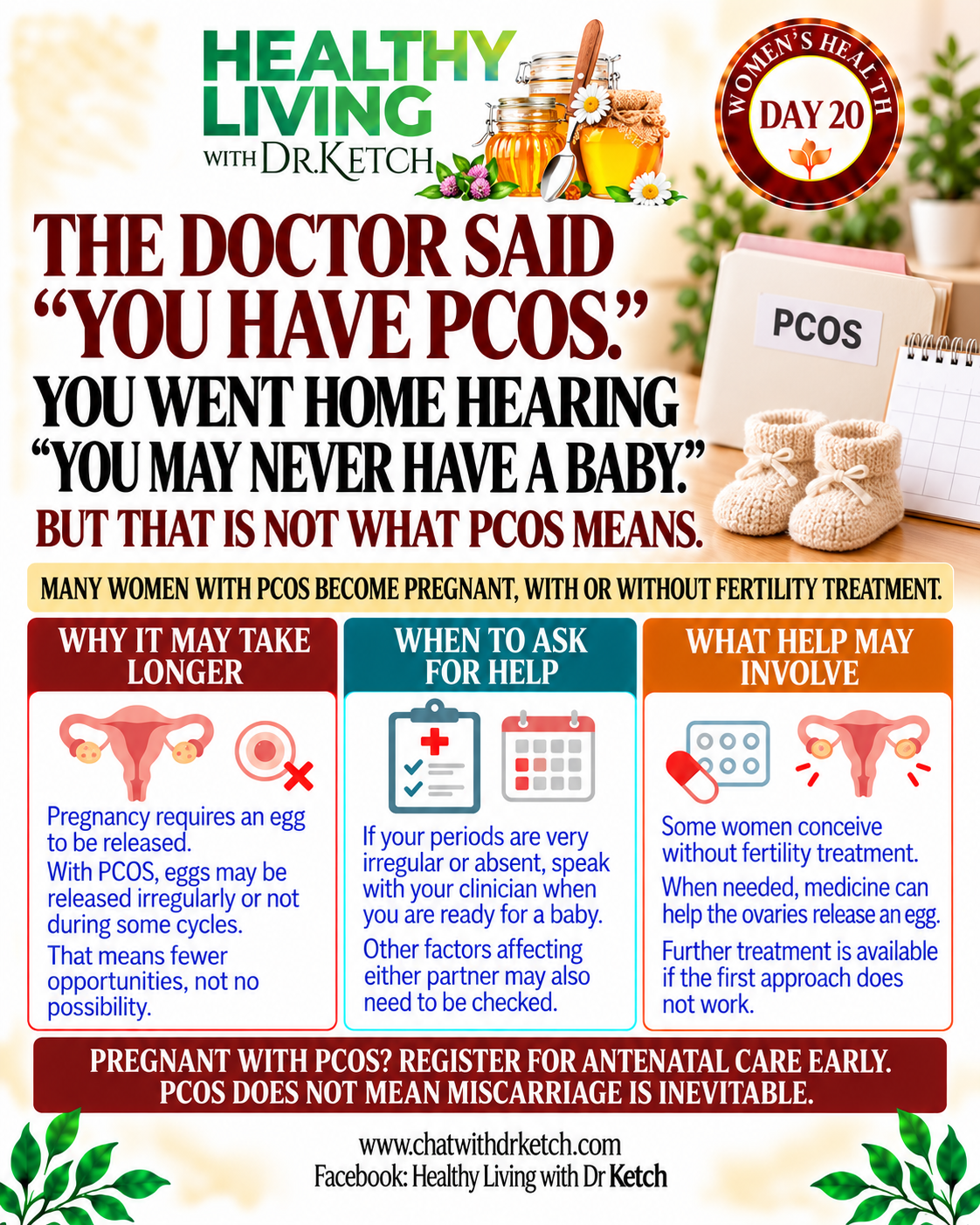
The doctor said, “You have PCOS.”
By the time you got home, the sentence in your head was, “I may never have a baby.”
But that is not what the diagnosis means.
Pregnancy requires an egg to be released. With polycystic ovary syndrome, commonly called PCOS, the ovaries may release eggs irregularly or may not release one during some cycles.
That can mean fewer opportunities to become pregnant. It does not mean there is no possibility.
Many women with PCOS conceive without fertility treatment. When help is needed, medication can encourage the ovaries to release an egg. Other fertility treatments are available if the first approach does not work.
If your periods are very irregular or absent, speak with your clinician when you are ready to start trying. You do not need to spend months guessing whether you are releasing eggs.
The fertility assessment should not end with “You have PCOS.” Other factors affecting you or your partner may also need to be checked.
If you currently take birth-control pills to manage your periods or other PCOS symptoms, tell your clinician when you want to become pregnant. The treatment plan will need to change because those pills prevent pregnancy while you are taking them.
Once pregnant, register for antenatal care early. PCOS can increase the likelihood of diabetes or high blood pressure during pregnancy, but it does not mean that miscarriage is inevitable.
If you have PCOS and hope to become a mother, ask for a preconception review so you understand your own situation and the help available.


