
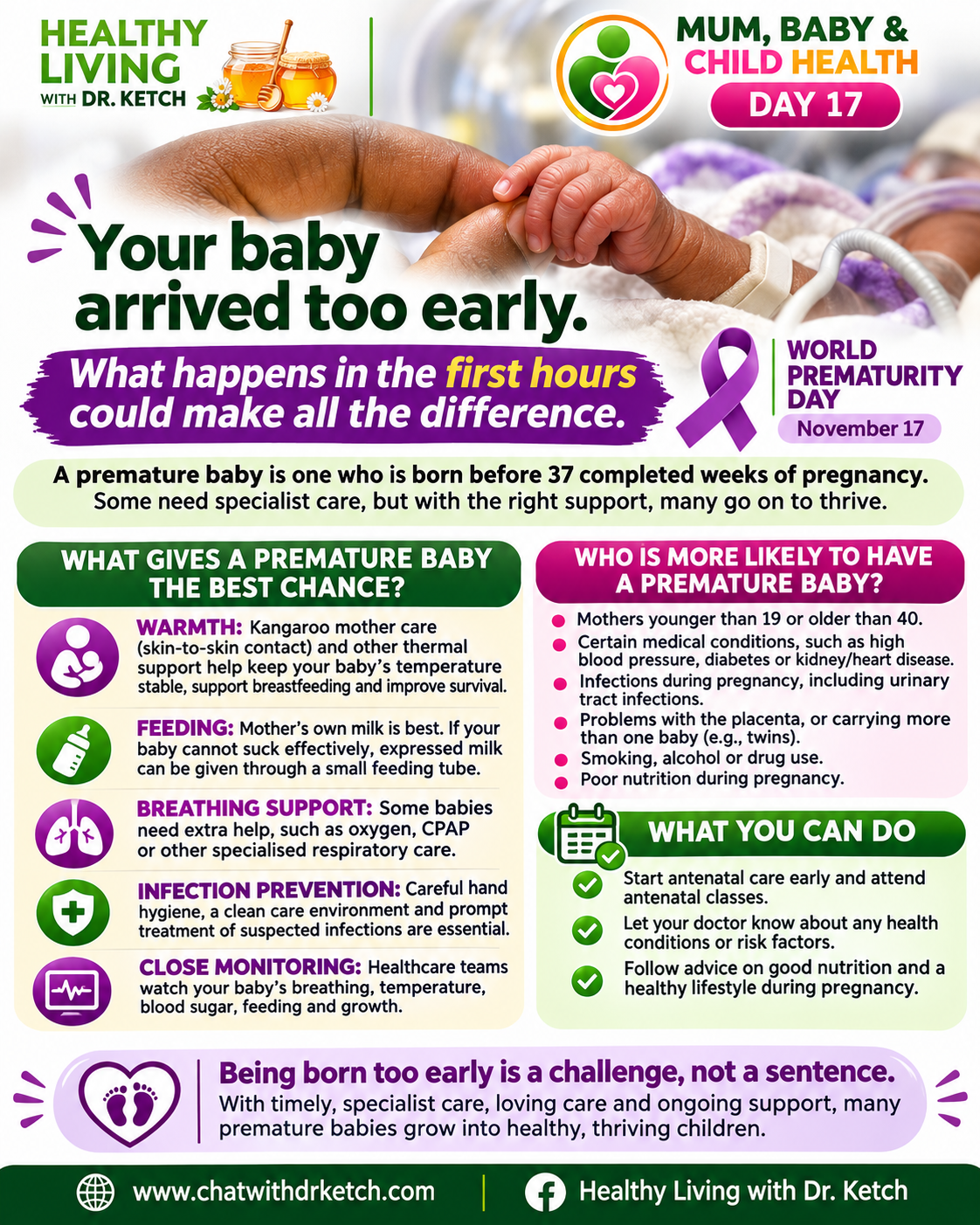
Your baby has arrived weeks too early. They’re so tiny you’re afraid to touch them. What happens next?
For many parents, the joy of childbirth is suddenly overshadowed by fear when their baby arrives prematurely.
Will the baby breathe properly? Will they be able to feed? Will they survive?
A baby born before 37 completed weeks of pregnancy is considered premature. The earlier the birth, the greater the risk of complications, although the baby’s condition and the care available also matter.
But, a premature baby doesn’t always need an incubator to stay warm. Sometimes, a parent’s chest can provide that lifesaving warmth.
It’s called ‘kangaroo mother care’, and it is one of the most important ways for improving survival among premature and low-birth-weight babies.
Holding a baby skin-to-skin, with appropriate clinical supervision, helps maintain body temperature and supports breastfeeding. For eligible babies, it can begin soon after birth, even while other medical care continues.
Some premature babies also need help breathing. Others cannot yet coordinate sucking and swallowing and may need expressed breast milk through a feeding tube. Preventing infections and recognising complications early are equally important.
And please remember that premature birth is not always preventable. Parents should not carry the burden of believing they must have done something wrong.
Were you or someone close to you a parent of a premature baby? What do you wish someone had told you during those first few days?
Your experience could help another family.


