
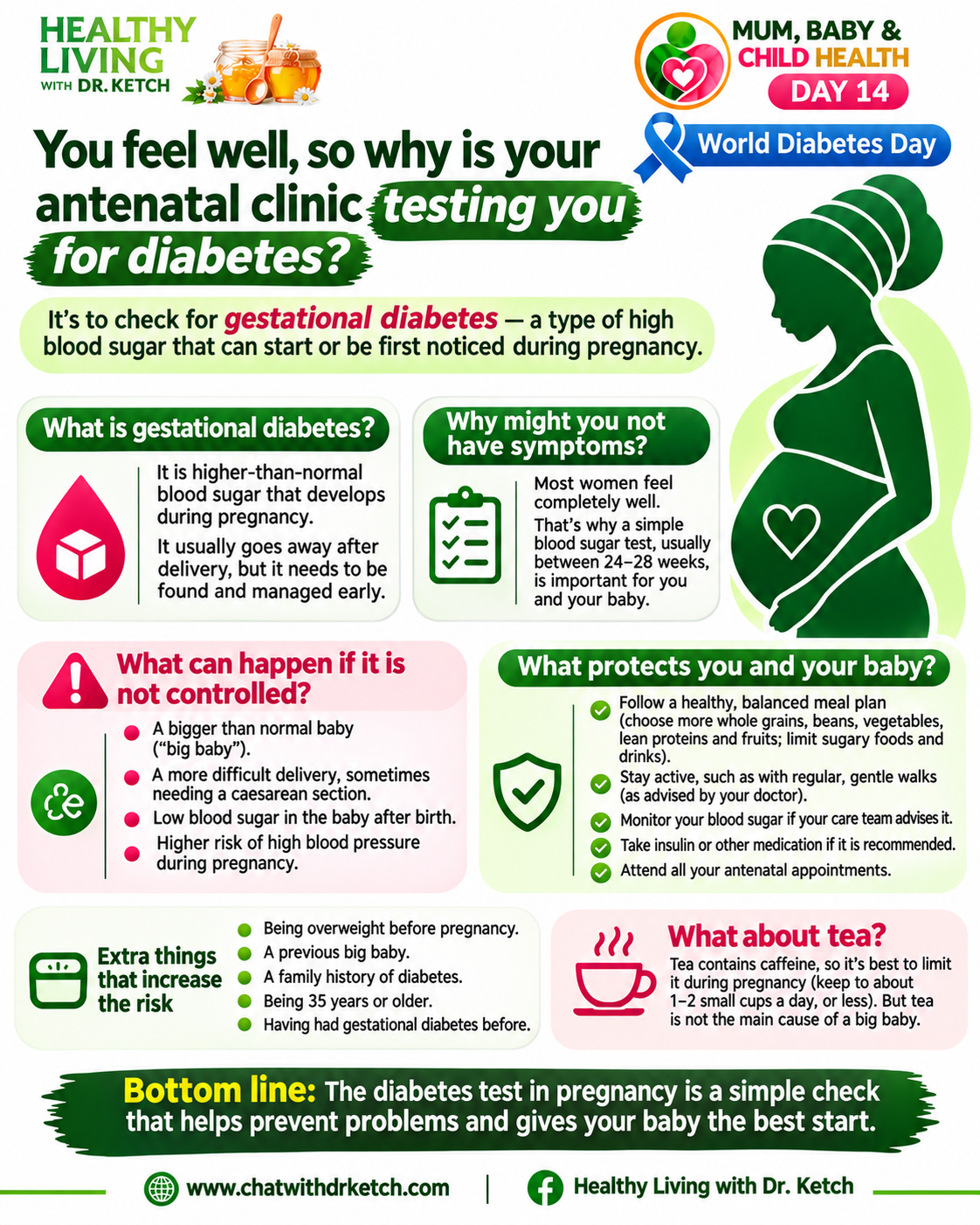
YOU’RE PREGNANT. YOU FEEL FINE. BUT YOUR BLOOD SUGAR COULD BE TOO HIGH WITHOUT YOU KNOWING!
Imagine going for your routine antenatal appointment, feeling perfectly healthy, only to be told that you have diabetes!
No excessive thirst. No frequent urination beyond what you’ve come to expect in pregnancy. Nothing to suggest anything is wrong.
How is that possible?
Well, there’s something called GESTATIONAL DIABETES, and many women who develop it have absolutely no symptoms!
Today is World Diabetes Day, and I want you and every pregnant woman to understand why that blood sugar test at the antenatal clinic is so important.
WHAT IS GESTATIONAL DIABETES?
It is diabetes first diagnosed during pregnancy in a woman who was not previously known to have diabetes.
During pregnancy, hormones produced by the placenta can make it harder for insulin to work properly. If your body cannot produce enough insulin to compensate, your blood sugar rises.
And you may feel completely fine!
WHY SHOULD YOU BE CONCERNED?
When your blood sugar remains too high during pregnancy, your baby may grow larger than expected.
This can increase the risk of a difficult delivery, including shoulder dystocia, where the baby’s shoulder becomes stuck during birth.
Your baby may also develop LOW blood sugar after delivery, particularly because their body has been producing extra insulin.
For the mother, gestational diabetes increases the risk of high blood pressure complications, including pre-eclampsia, and Caesarean delivery.
It also increases the likelihood of developing type 2 diabetes later in life.
WHEN SHOULD YOU BE TESTED?
Most pregnant women are screened for gestational diabetes between 24 and 28 weeks of pregnancy.
If you have certain risk factors, your healthcare provider may recommend testing earlier.
And please, don’t skip the test simply because you feel healthy!
WHAT HAPPENS IF YOU HAVE GESTATIONAL DIABETES?
First, don’t panic. Many women with gestational diabetes go on to have healthy pregnancies and healthy babies.
Treatment usually involves making appropriate changes to what you eat, monitoring your blood sugar and staying physically active when it is safe to do so.
Some women will also need medication, including insulin, to keep their blood sugar within the recommended range.
Please don’t starve yourself to make your baby smaller! The goal is to manage your blood sugar while ensuring that you and your baby receive adequate nutrition.
DOES THE DIABETES DISAPPEAR AFTER DELIVERY?
Gestational diabetes often resolves after childbirth, but that doesn’t mean you should forget about it.
You should have a blood sugar test, usually a 75-g oral glucose tolerance test, 4–12 weeks after delivery.
Even if the result is normal, you will need periodic diabetes screening because your risk of developing type 2 diabetes remains higher.
So, the next time your antenatal clinic asks you to check your blood sugar, please take that test seriously.
Feeling healthy is wonderful. But it cannot tell you what your blood sugar is doing.
Have you ever been diagnosed with gestational diabetes, or do you know someone who was? Did they have any symptoms before the diagnosis?
#HealthyLivingWithDrKetch


