
Every parent’s heart would skip a beat.
But what does that really mean? How serious is it? And what can be done?
If you’ve ever welcomed a new baby or know someone who has this is one post worth reading.
In today’s post, I’ll explain:
Why newborn blood sugar naturally drops after birth
Which babies are most at risk
The warning signs every parent should know
How low blood sugar is treated
And why early treatment can protect your baby’s brain.
Please read and share with an expectant parent 🙂
Q: Hi my cousin gave birth yesterday and baby glucose was below 2 and even today, it’s still fluctuating by below 2. What is it that could help increase thee glucose level?
A: Hi dear, thanks for writing in and congratulations to your cousin.
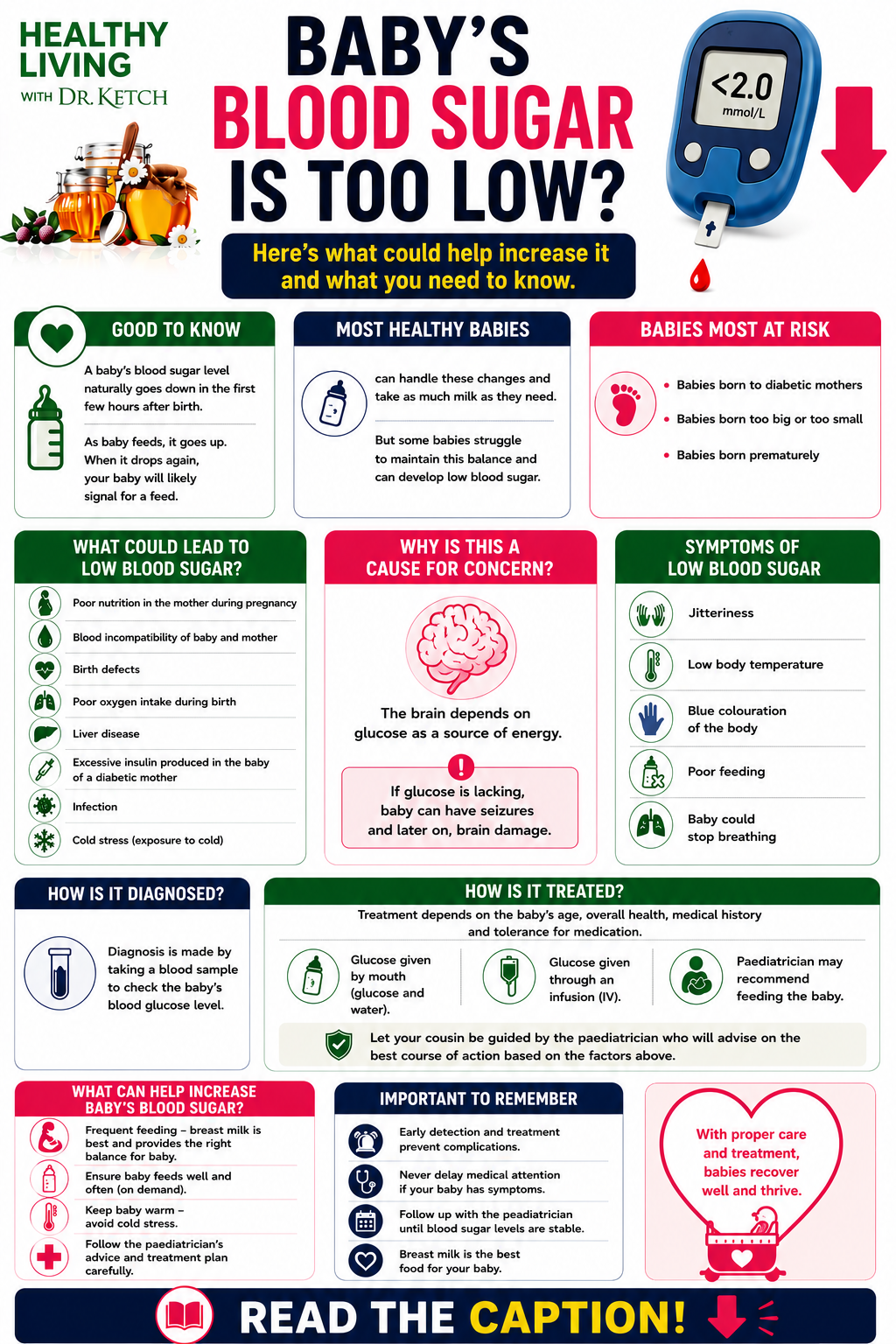
A baby’s blood sugar level goes down in the first couple of hours after birth. This is normal. As baby feeds, the blood sugar level goes up and by the time it goes down again, your baby is probably already signaling for a feed.
Most healthy babies are able to deal with this variation in blood glucose levels as they will take as much milk as they need to keep their blood sugar level normal. Some babies are however not able to maintain this delicate balance and so low blood sugar is common in:
Babies born to diabetic mothers,
Babies born, too big or too small
Babies born prematurely
What could lead to this?
Poor nutrition in the mother during pregnancy
Blood incompatibility of baby and mother
Birth defects
Poor oxygen intake during birth
Liver disease
Excessive insulin produced in the baby of a diabetic mother
Infection
Cold stress (exposure to cold)
Why is this is cause for concern? It’s because the brain depends on glucose as a source of energy. If this is lacking, then baby starts to experience seizures and later on, brain damage. Other symptoms of low blood sugar include:
Jitteriness
Low body temperature
Blue colouration of the body
Poor feeding
Baby could stop breathing
Diagnosis is made by taking a blood sample and treatment is dependent on baby’s age at birth, baby’s overall health and medical history, baby’s tolerance for medication etc.
Treatment typically involves giving the baby glucose – either in the form of glucose and water by mouth or through an infusion. Or the paediatrician may recommend feeding the baby.
Let your cousin be guided by the paediatrician who will advise on the best course of action based on factors already described above.
All the best!


