
You haven’t been running. You haven’t climbed a mountain. So why does walking across the room suddenly leave you out of breath?
If you’re pregnant, you’re not alone.
Mild breathlessness is common because your body is working harder to support your growing baby. But while it’s often normal, there are times when breathlessness should never be ignored.
Here’s how to tell the difference… Read!
Q: Hi Doc, I love you and your program, therefore I have decided to write to you. I am 3 weeks pregnant and I want to find out what I can do to stop feeling breathless?
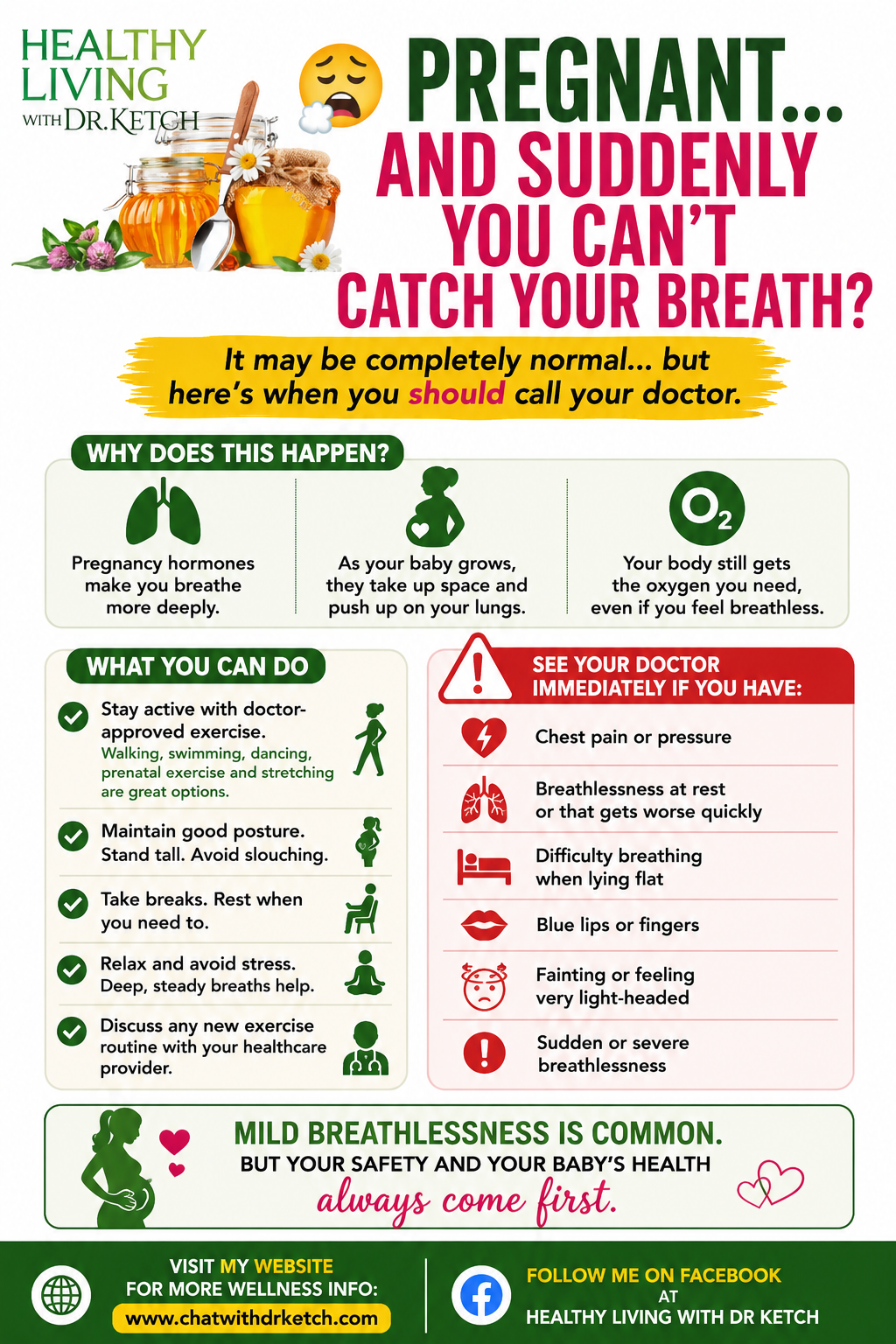
A: The pregnancy hormone, progesterone, makes your body adapt to the way it absorbs oxygen from the lungs. It leads to pregnant women taking in deeper breaths and gives the impression of breathlessness in some women
.
Other women who have not experienced breathlessness throughout pregnancy may experience it during the third trimester as they deal with baby’s extra weight.
Essentially, the growing baby at this time, pushes up into the lungs and reduces the space available in the lungs for air.
However, this is offset by the deeper breaths being taken by the pregnant woman (an effect caused by the pregnancy hormone, progesterone).
This ensures that, though less air is being taken in (due to the smaller capacity/space available in the lungs), the air stays in the lungs long enough for the oxygen to be properly extracted.
As the pregnancy progresses and baby descends into the pelvis in preparation for delivery, the symptoms may reduce. However, for mothers who have had babies before, this descent into the pelvis may not happen until the very end of the pregnancy and so this means the breathlessness may continue for a while longer 😀
To help with this breathlessness, try exercising.
You can continue with the activities you used to do before including exercise. However, exercise should be toned down from vigorous to moderate.
Moderate exercise is any physical activity that you perform that but you’re still able to carry on a conversation without running out of breath…that’s as simple an explanation as it goes 😀
It includes walking, swimming, dancing, pregnancy exercises (these are taught in some antenatal classes), stretching and relaxation exercises.
Remember that you must never start on any exercise regimen without discussing with your doctor who knows your specific medical history.
Maintain a good posture too. Stand straight. No slouching, please 😀
And as much as possible, try to relax.
However, if this breathlessness is associated with chest pain, difficulty breathing when lying down at night, please see your doctor.


