You feel perfectly well, so cervical screening is easy to postpone.
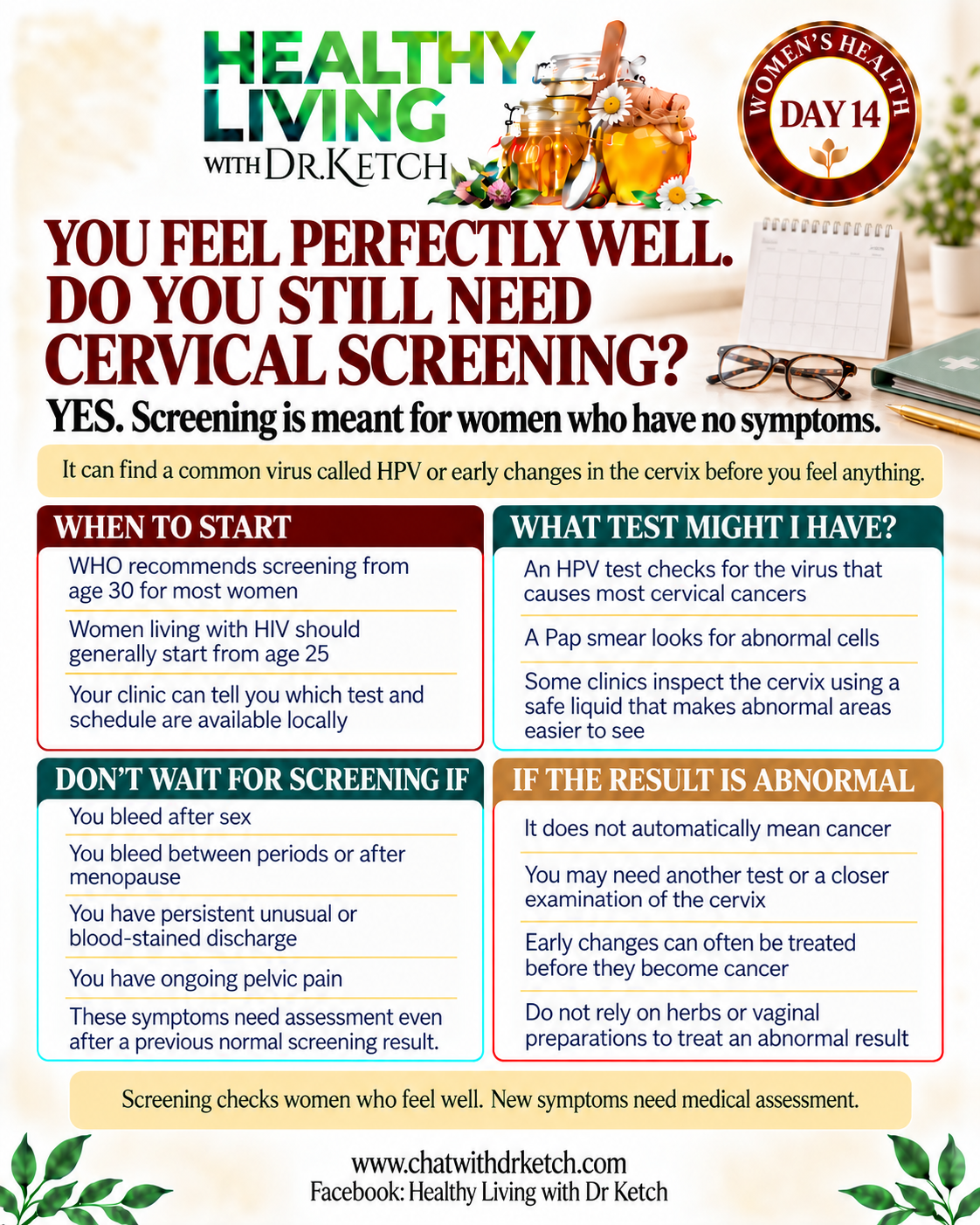
But screening is not something you wait to need. Its purpose is to find HPV or early changes in the cervix before you feel anything.
The cervix is the mouth of the womb. HPV is a common virus that can cause changes in its cells. Most HPV infections clear without causing problems, but some persist and may eventually lead to cervical cancer.
WHO recommends screening from age 30 for most women. Women living with HIV should generally begin from age 25. Your clinic can tell you which screening test is available and when you should repeat it.
An abnormal result does not automatically mean cancer. Your doctor will explain what was found and what should happen next.
Do not wait for routine screening if you notice a new symptom. Unexpected vaginal bleeding should be assessed, even if it stops. Any other change that persists should also be checked.
And yes, screening is still important, even if you have received the HPV vaccine.😊
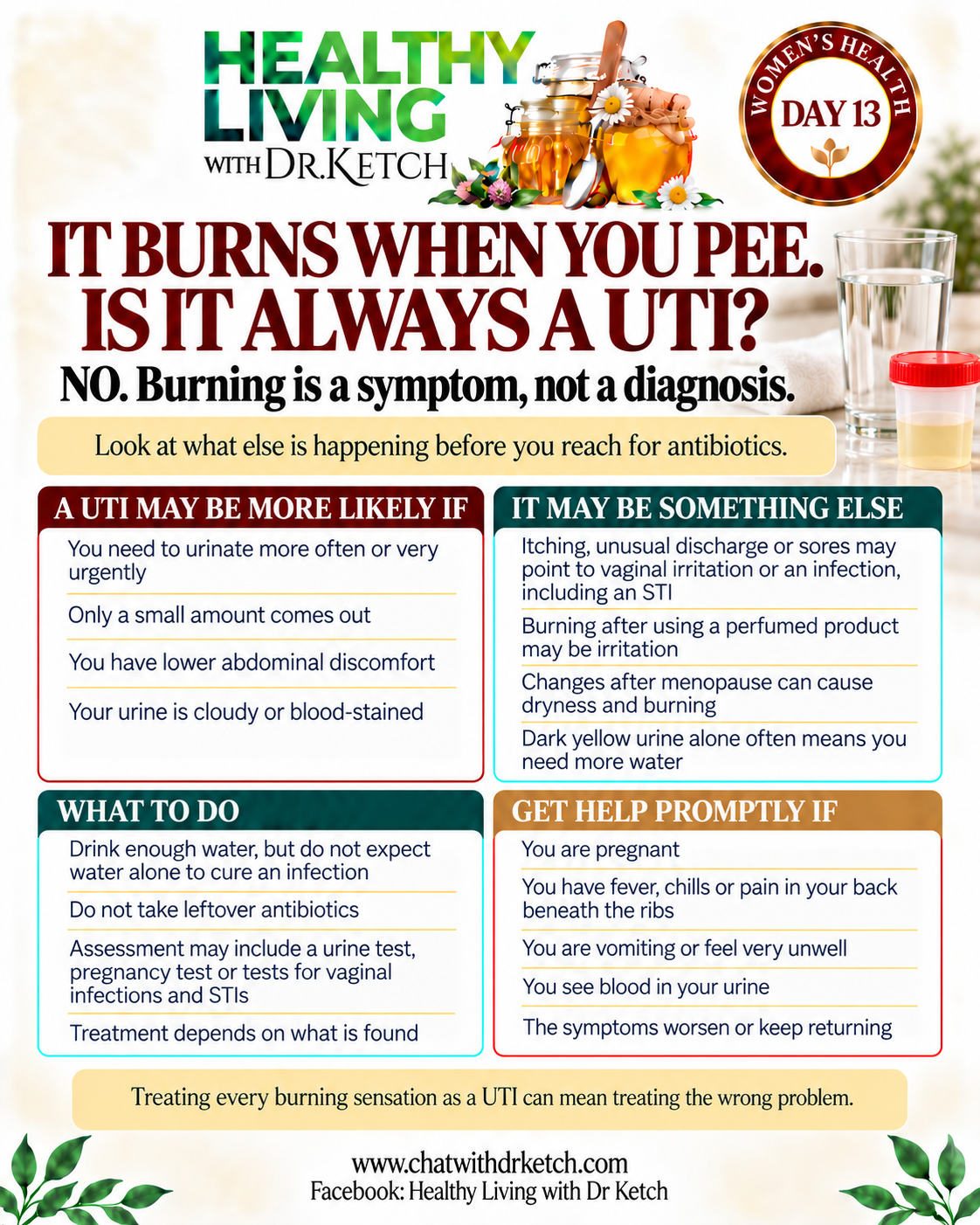
It burns when you pee, so what do you do? You reach for antibiotics.
But burning is a symptom, not a diagnosis. Read!
Q: Please I do feel some pain when I piss (urinate) and the piss (urine) is somehow yellow. What’s the cause please?
A: Generally, pain when urinating could be due to:
§ Injury: This could be a straddle injury (falling astride a pole, for example), car accidents etc
§ Infections of the urinary tract
§ Infections of the prostate (in males)
§ Sexually transmitted infections
§ Cancer etc
Treatment depends on the cause. If it’s due to infections, appropriate antibiotics will take care of the problem. Surgery may be used for cancer etc.
Urinary tract infections are quite common and occur anywhere in the urinary tract (Genius me, right? ) and include infections of the kidneys, the ureters (the tubes that connect the kidneys to the bladder), the bladder (the reservoir or store house for the urine) and the urethra (the tube that transports the urine from the bladder to the outside).
So, who is more likely to have an infection and why?
Women are more likely to have infections and this is because they have short urethrae (those tubes that transport the urine outside) and because the opening of this tube is very close to the opening of the anus.
And so, if a woman urinates and has not quite mastered the art of cleaning from the front to the back, she could transfer bacteria from her anus to her urethra and this in turn travels up and infects the bladder.
Women who also use the birth control method, diaphragm appear to also be at risk as it may cause the bladder not to empty completely when they urinate.
Indeed, not urinating immediately after sexual intercourse in women may also predispose to this as the urethra may have may have become irritated, making it easier for germs to move in.
People with depressed immune systems, frequent constipation and some people born with some disorders of their uro-genital system are also prone to UTIs.
In men, narrowing of the urethra which may happen in men who have had straddle injuries (eg falling astride {with legs apart} on a pole…ouch!), history of STIs or prostrate problems may make a man open to UTIs.
Recurrent and chronic urinary tract infections (UTI that keeps recurring) may be due to changes in hormone (estrogen) level as one gets to menopause, problems with the urinary tract in terms of function or shape, kidney or bladder stones, bacteria getting into the urinary tract during sexual intercourse etc
What symptoms does a person with UTI have? They would complain of feeling they have to urgently urinate often and then when they do get to the toilet, they can only pass out very little urine, pain or burning sensation during urination, pain in the flank (just under the ribs at the back), the urine may be cloudy or reddish or coke coloured, fever with chills and rigours etc.
UTIs have to be treated because these infections could keep back tracking from the urethra to the bladder to the ureters and then to the kidneys…we don’t want that do we?!
Treatment is focused on eradicating the infection…of course Usually a urine sample is taken to the lab. Part of the lab work is a culture and sensitivity test to find out the organisms causing the infection and the specific antibiotic that is active against it.
Your doctor may also order other tests as he sees fit eg checking out for congenital defects etc. Apart from the preventive tips above, be sure to drink lots of water which help dilute your urine and help flush out the bacteria. If your urine is light yellow, then you’re good. If it’s a darker hue, you’re probably dehydrated. So, your yellow urine may be pointing towards dehydration.
If placed on antibiotics, please take your prescription for the right period of time even if your symptoms disappear before you finish
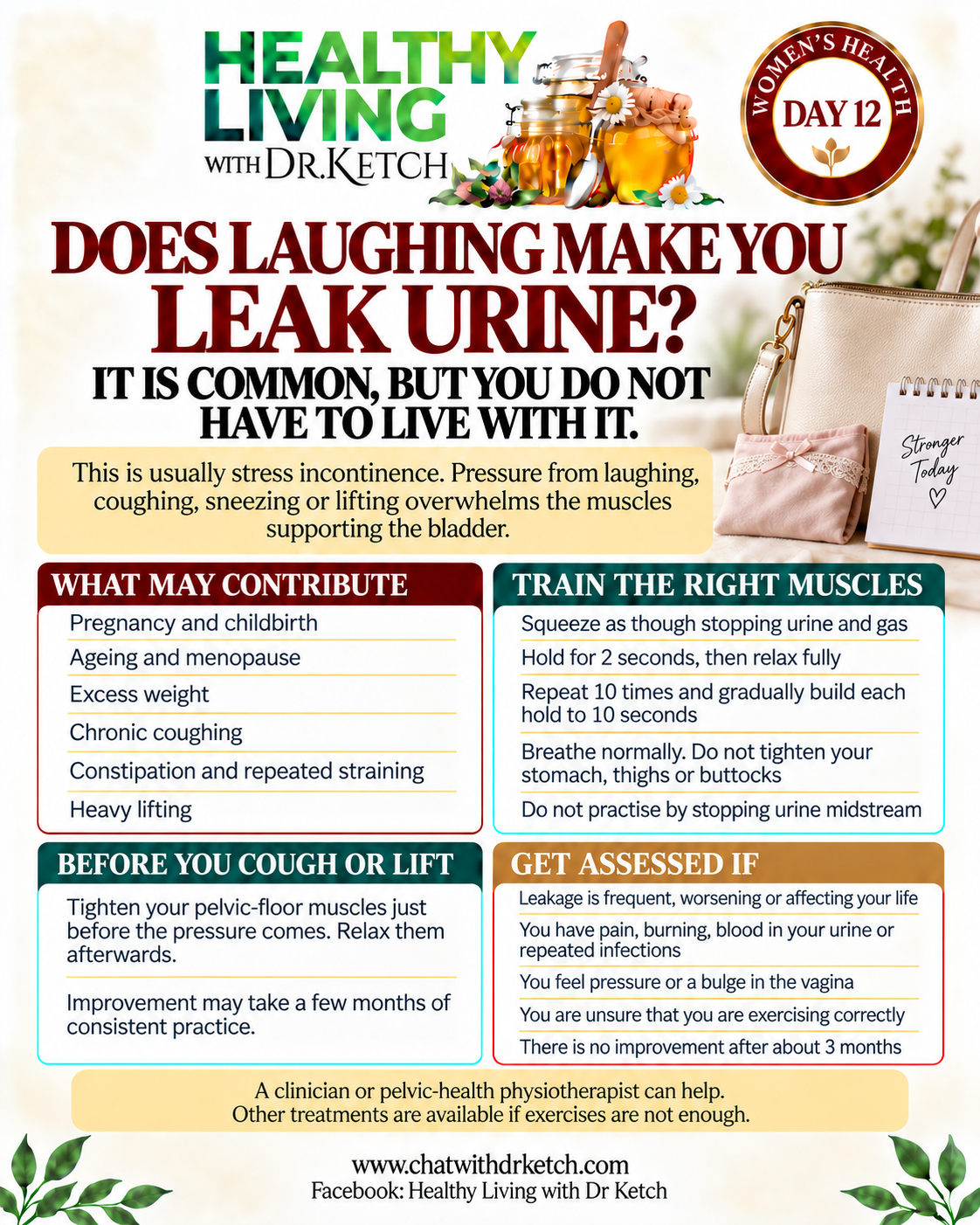
This is called stress incontinence. It happens when sudden pressure on the bladder causes urine to leak. Pregnancy, childbirth and changes associated with ageing can weaken the muscles supporting the bladder.
Pelvic-floor exercises can help. Squeeze the muscles you would use to stop yourself passing urine and gas. Hold briefly, then relax fully. Repeat regularly and gradually increase the length of each hold.
It also helps to tighten these muscles just before you cough or lift something.
If the leaking continues and affects your daily life or comes with other urinary symptoms, please get assessed. A doctor can help you identify the cause and discuss treatment.
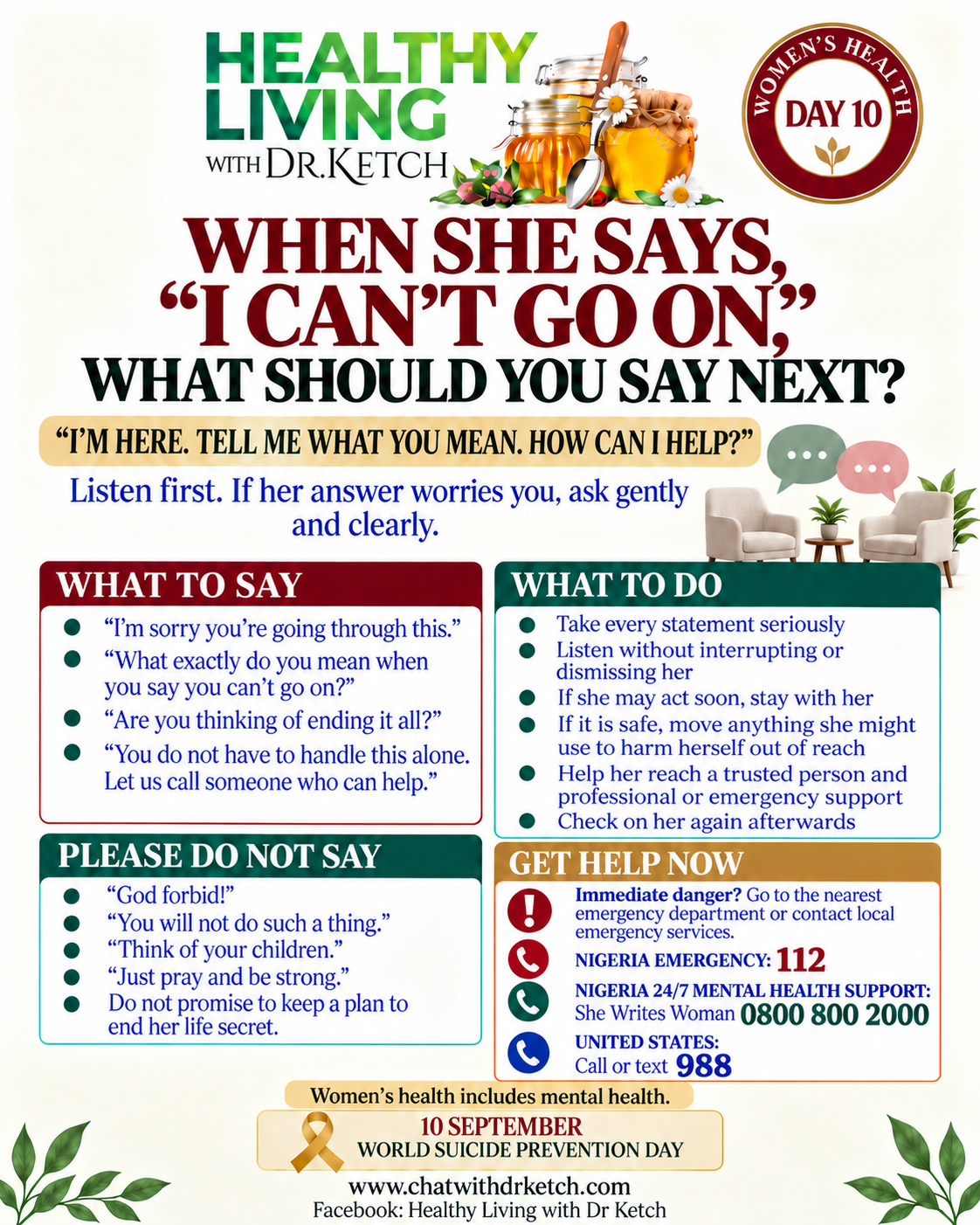
“I’m here. Tell me what you mean. How can I help?”
Listen carefully. Do not interrupt her or rush to tell her that everything will be fine.
If you are worried by what she says, ask gently:
“Are you thinking of ending it all?”
If she may act soon, stay with her. If it is safe, move anything she might use to harm herself out of reach.
Help her contact someone she trusts and connect her with professional support. Do not promise to keep a plan to end her life secret.
Please do not respond with “God forbid,” “Think of your children” or “Just pray and be strong.” Faith and family may support her, but they should not replace urgent help.
If she is in immediate danger or has already harmed herself, take her to the nearest emergency department or contact emergency services.
Before you celebrate or panic, ask one important question.
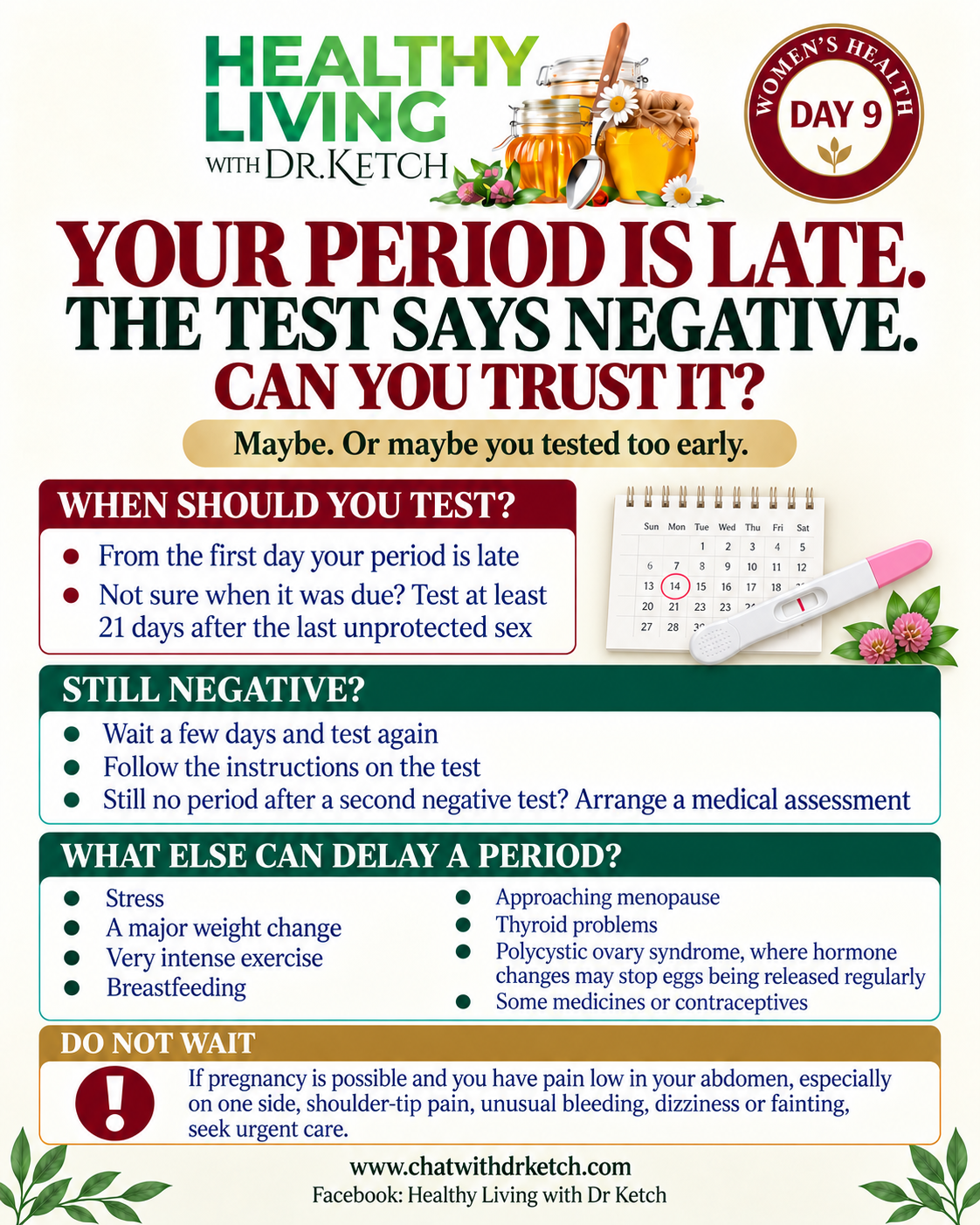
When did I take the test?
A negative result can happen when you test too early. Most home pregnancy tests are most reliable from the first day your period is late.
If you are not sure when your period was due, test at least 21 days after the last unprotected sex.
Still negative?
Wait a few days and test again. Follow the instructions carefully. If the second test is negative and your period still has not arrived, arrange a medical assessment.
Remember that pregnancy is not the only reason a period may be late. Stress, major weight changes, very intense exercise, breastfeeding, approaching menopause, thyroid problems and some medicines or contraceptives may affect your cycle.
Another possible cause is polycystic ovary syndrome. This is a condition in which hormone changes may stop the ovaries from releasing eggs regularly.
Please do not keep repeating pregnancy tests while ignoring severe symptoms.
If pregnancy is possible and you have pain low in your abdomen, especially on one side, shoulder-tip pain, unusual bleeding, dizziness or fainting, seek urgent medical care.
Save this poster. Remember that knowing when to repeat the test is just as important as knowing how to take it.
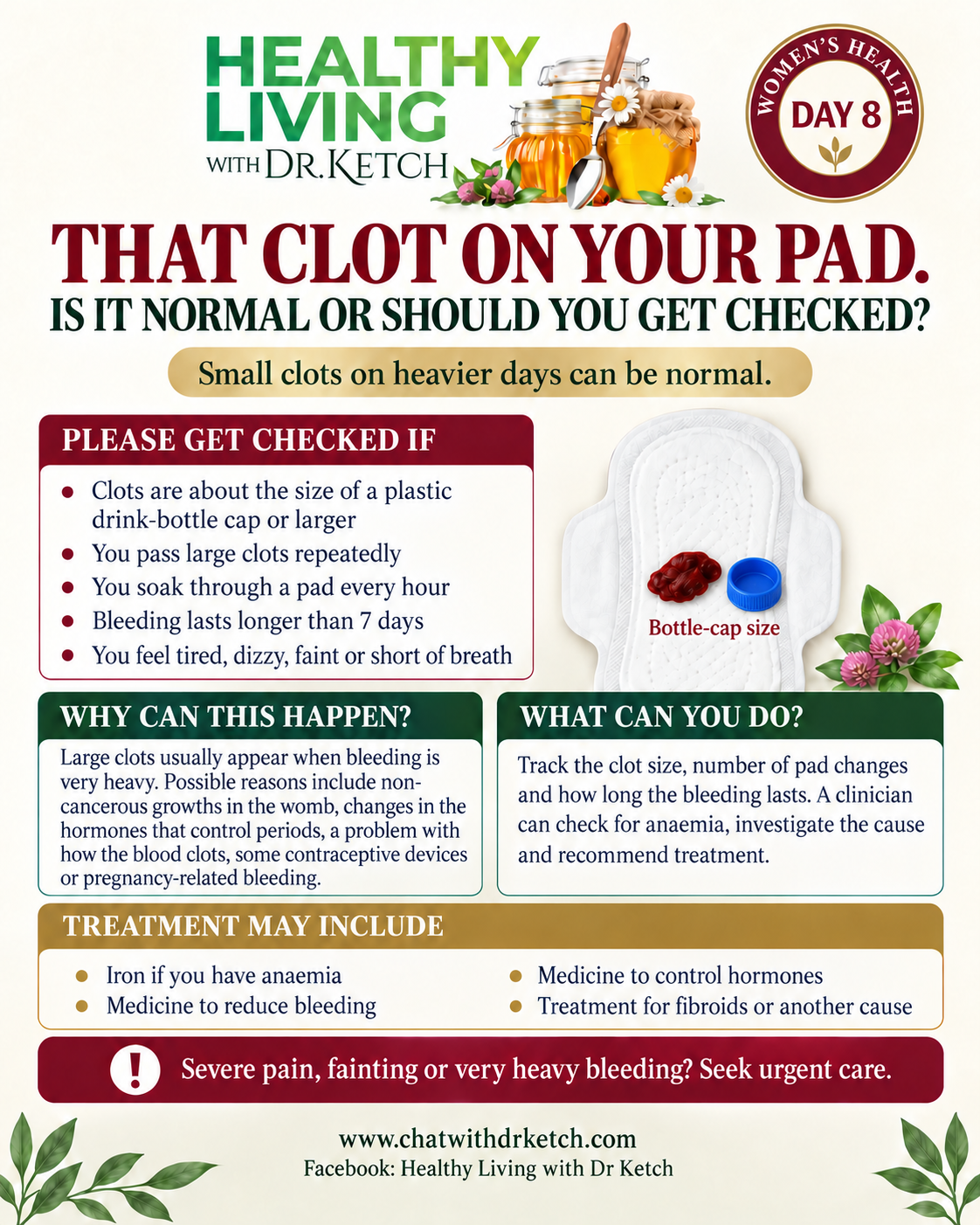
Before you dismiss it, compare it with the top of a plastic drink bottle.
Small clots can appear on the heavier days of a period. A plastic drink-bottle cap is slightly wider than 2.5 cm, so it provides a practical guide at home.
If your clots are about that size or larger, especially if you pass them repeatedly, please get checked.
Also speak with a doctor if you soak through a pad every hour, bleed for longer than seven days or regularly bleed through your clothes or bedding.
Feeling tired, dizzy, faint or short of breath may mean that the bleeding has caused anaemia.
Why can this happen?
Fibroids are non-cancerous growths in the womb that can cause heavier bleeding.
Adenomyosis happens when tissue similar to the womb lining grows into the muscular wall of the womb.
Changes in the hormones that control your periods can also make the womb lining become thicker and produce heavier bleeding.
Some women have conditions that make it harder for their blood to clot normally. A copper contraceptive device may also make periods heavier.
If pregnancy is possible, do not assume the bleeding is an ordinary period. Bleeding with clots needs prompt medical assessment.
Treatment depends on the cause. Your doctor may check your blood level for anaemia and arrange further tests. Treatment may include iron, medicine to reduce the bleeding, hormonal treatment or treatment for fibroids or another underlying condition.
A bottle cap is only a rough guide. One clot does not tell the whole story. How often it happens and how heavily you are bleeding are equally as important.
Save this poster so you know what to look for during your next period.
If anyone has ever given you this advice, please do not follow it.
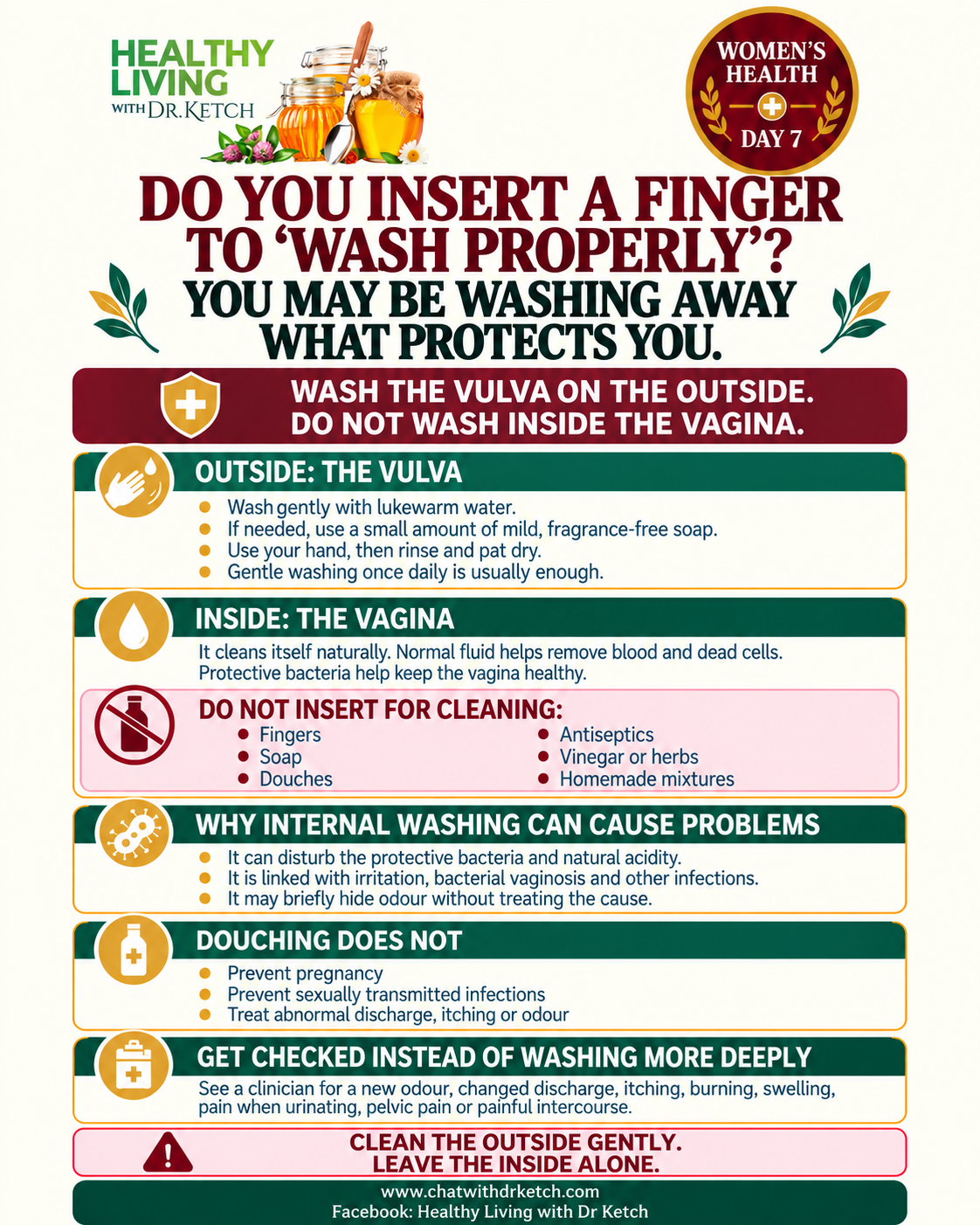
The vulva is the outside area. Wash it gently with lukewarm water. If needed, use a small amount of mild, fragrance-free soap.
The vagina is the passage inside your body. It cleans itself naturally, and its protective bacteria help keep it healthy. Fingers, soap, antiseptics, douches and homemade mixtures do not belong inside it for cleaning.
Washing inside may disturb the natural balance, cause irritation and increase the likelihood of infection. Douching also does not prevent pregnancy or sexually transmitted infections.
If you notice a new odour, changed discharge, itching, burning, swelling or pain, get checked instead of washing more deeply.
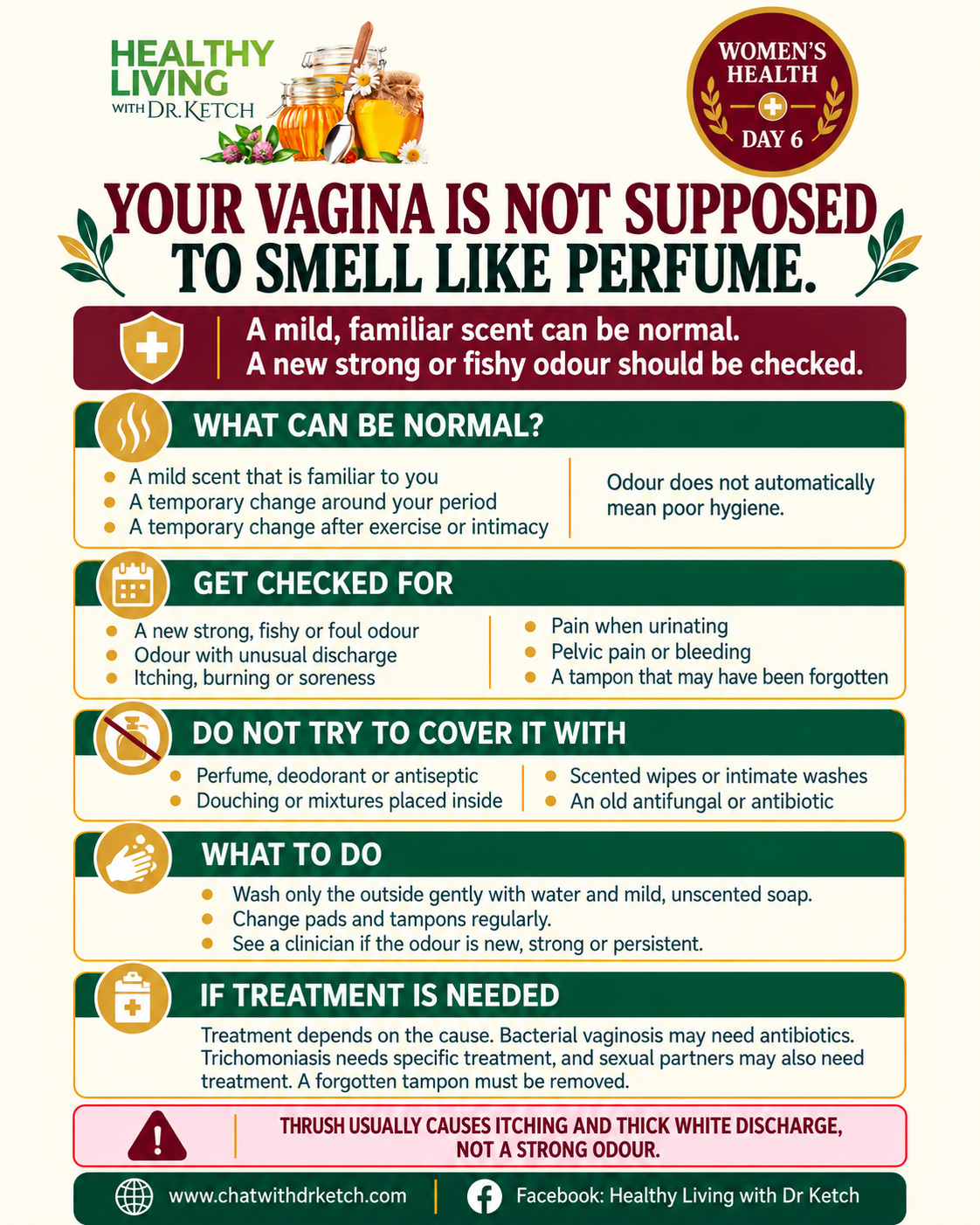
Perfume and intimate wash cannot fix the cause of a new vaginal odour. They may irritate the area and make the problem worse.
A healthy vagina has a natural scent. The important question is not whether it has any smell. It is whether the smell has changed. Read!
Daily Health Tips: Is Vaginal Odour Normal?
Posted on December 8, 2014 by chatwithdrketch
1 Vote
Q: Hello Dr ketch! Please, is vaginal odor common with every female? If not, please help with the cure because it’s really irritating! Please, help ASAP! Because I really want to retain my faithfulness! But the odor is trying to break me!!…. Thank you.
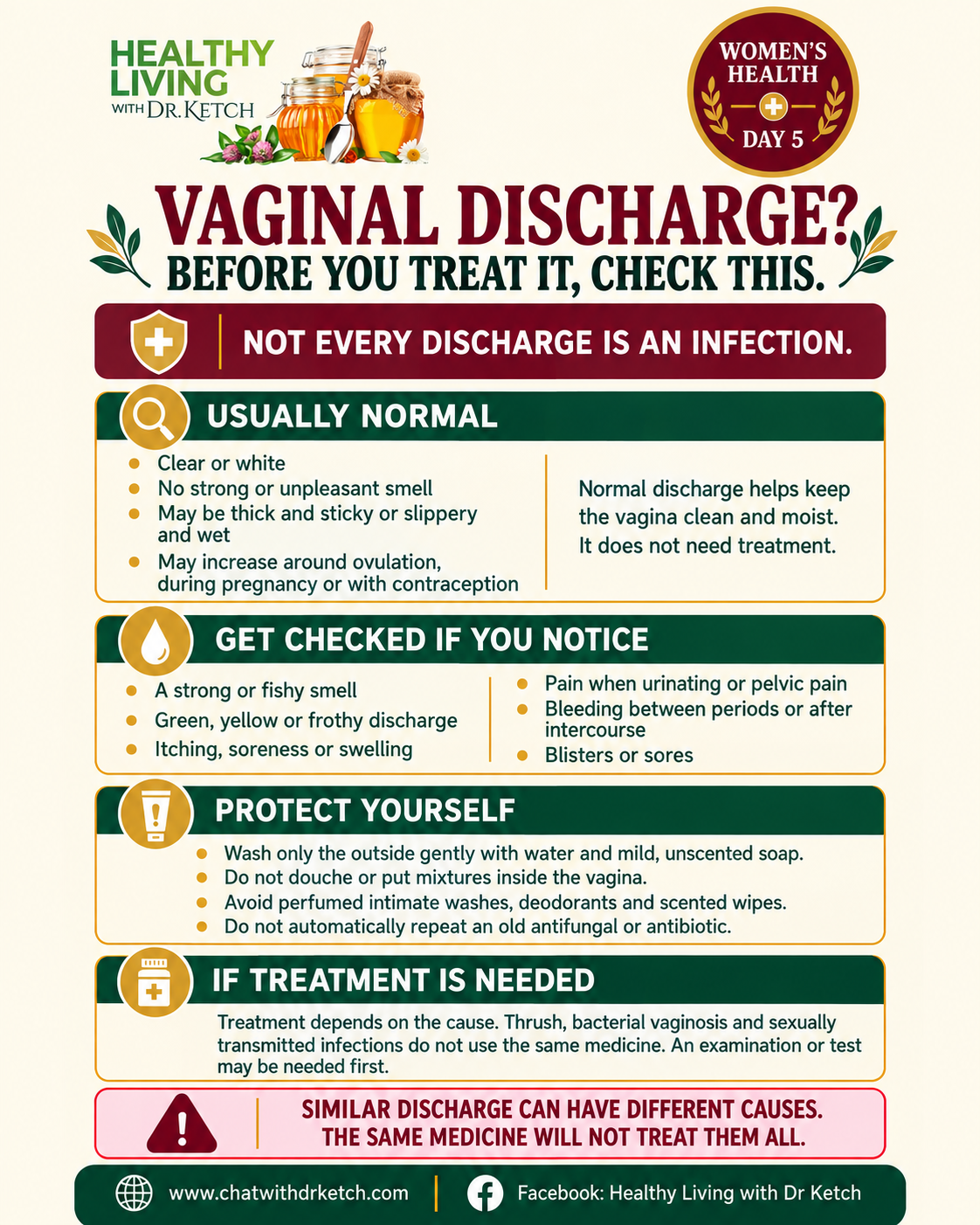
A: Yes some degree of vaginal odour is common with all women. In the same way, some degree of discharge is also normal as the glands in the vagina and cervix produce fluid which wash away dry, dead cells and flush out bacteria.
A strong vaginal odour which appears different from normal especially when associated with other symptoms like a burning sensation, itching, discharge etc may be suggestive of a problem…some more easily solved than others.
For instance:
Poor vaginal hygiene. This can be easily remedied by washing daily with unscented or mildly scented soap and loads of water, not douching, cleaning from the front to the back etc. Vaginal odour may also be more pronounced during a menstrual period and after sexual intercourse. And so, more frequent baths (as much as practicable) during and/or before these periods may be helpful. Frequent change of sanitary towels and tampons are also helpful measures. Forgotten tampons are actually a cause of vaginal odour.
A fishy smell associated with vaginal discharge is suggestive of overgrowth of the vagina by bacteria (bacterial vaginosis). This may be caused by over use of antibiotics or douching.
Yellow or greenish or frothy discharge with a bad smell with pain and itching while urinating is suggestive of trichomoniasis infection (a sexually transmitted infection)
Some cancers like cervical or vaginal cancer may also cause vaginal odour.
What’s the remedy? Well, if it’s due to lack of vaginal hygiene, that’s easily solved as noted above. If there are other associated symptoms which may suggest other problems, than a proper diagnosis needs to be made so that adequate treatment can be given.
In the meantime, vaginal hygiene is a good place to start.
Nicely suggest taking a nice leisurely bath before sexual intercourse, give broad hints about things you read in places that may be useful to her…be sure to also suggest some for yourself too, so that she doesn’t feel you’re picking on her.
How this is communicated is key as offence may be taken, not necessarily because of what was said but because of how it was said. So, the right words are important

 ) and include infections of the kidneys, the ureters (the tubes that connect the kidneys to the bladder), the bladder (the reservoir or store house for the urine) and the urethra (the tube that transports the urine from the bladder to the outside).