
That walk you nearly skipped was doing more than burning calories.
It was helping your heart and your bones.
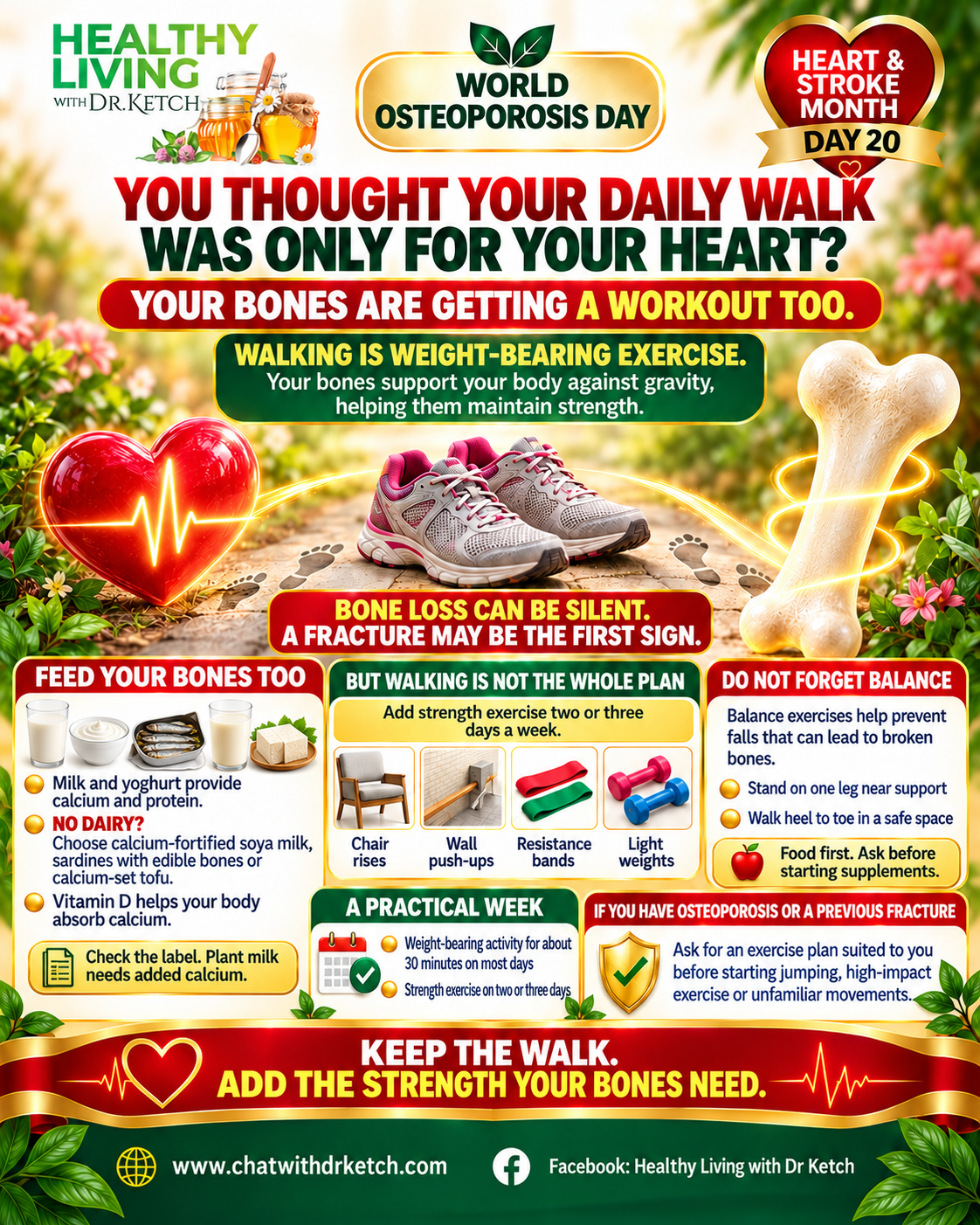
Walking is weight-bearing exercise. Your bones support your body against gravity, which helps them maintain strength.
But your bones cannot exercise their way out of poor nutrition.
Milk and yoghurt are useful because they provide calcium and protein. One cup of milk contains about 300 mg of calcium.
If you do not take dairy, you still have options. Try calcium-fortified soya milk, sardines eaten with their soft bones or calcium-set tofu. Check the label when buying plant milk because many varieties contain very little calcium unless it has been added.
Vitamin D also matters because it helps your body absorb calcium. Not every milk product contains vitamin D, so check whether it has been fortified.
Walking is still not the whole exercise plan. Add strength exercise two or three days a week. Chair rises, wall push-ups, resistance bands and light weights are practical places to begin.
Balance exercises can reduce falls that may lead to broken bones.
Osteoporosis may weaken bones without obvious symptoms. For some people, a fracture is the first sign.
Get calcium from food where possible. Do not start calcium or vitamin D supplements blindly. Ask a healthcare professional whether you need them.
Keep the walk. Feed your bones well. Add the strength they need.
World Osteoporosis Day


