
You paid more for the bottle because it said “heart-healthy.”
Now you pour it straight into the pot without measuring.
A healthier oil is a better choice of fat. It is not permission to use an unlimited amount 
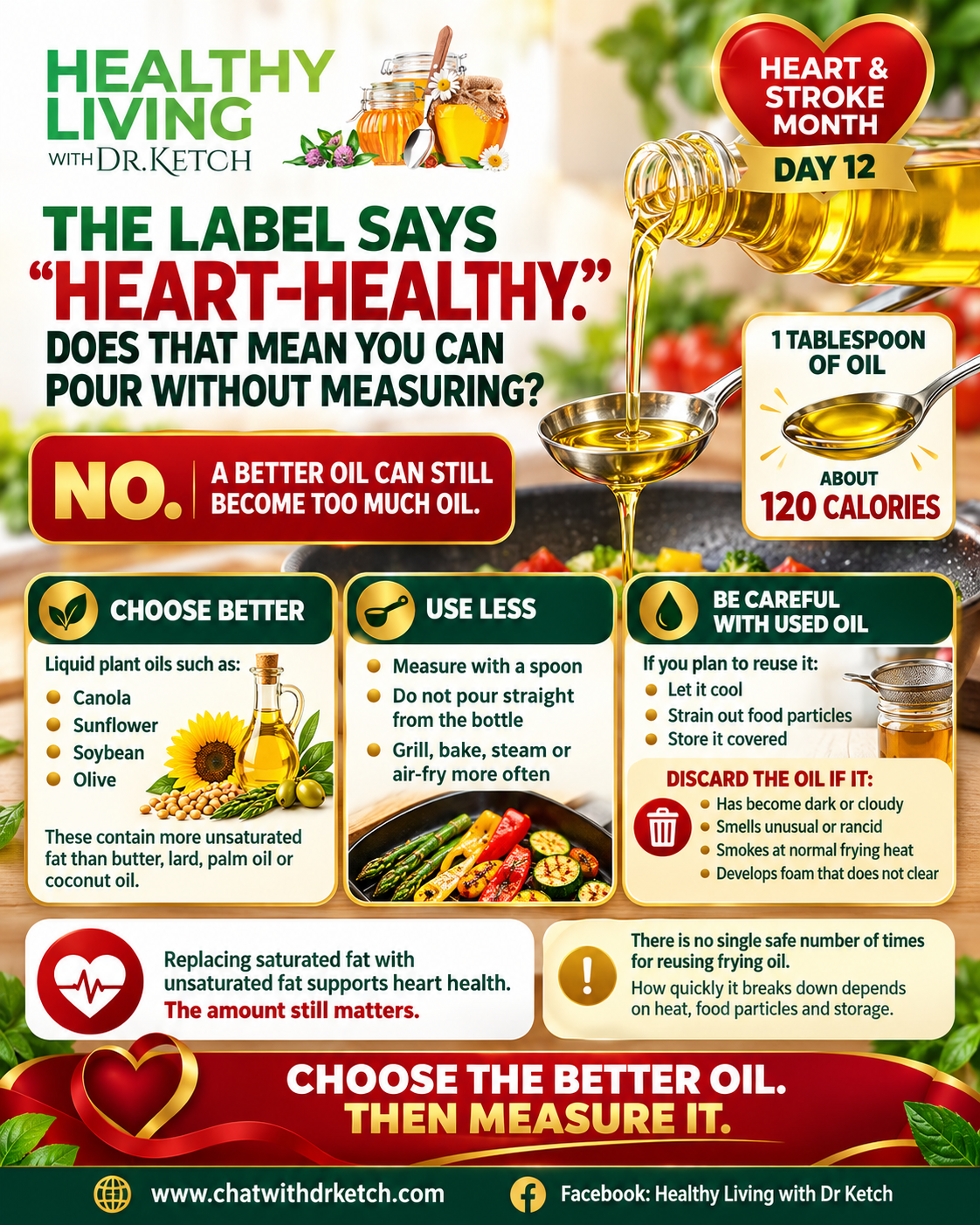
Liquid plant oils such as canola, sunflower, soybean and olive oil contain more unsaturated fat than butter, lard, palm oil or coconut oil. Replacing saturated fat with unsaturated fat can support heart health.
But all cooking oils are calorie-dense.
One tablespoon contains about 120 calories. It does not matter which oil.
A generous free pour can quietly add several tablespoons to one meal. Measure the oil before it enters the pot. A teaspoon or tablespoon makes the amount visible.
Grilling, baking, steaming and air-frying can also reduce how much oil a meal needs.
What about frying oil you have already used?
There is no single number of times that oil can safely be reused. It depends on how hot it became, what was fried in it and how it was stored.
If you plan to reuse it, allow it to cool. Strain out the food particles and store it in a covered container.
Discard it when it becomes unusually dark or cloudy. Throw it away if it smells rancid, develops persistent foam or begins smoking at a normal frying temperature.
“Heart-healthy” describes the type of fat.
It does not mean calorie-free, and it certainly does not mean pour freely.
Choose the better oil. Then measure it.


