
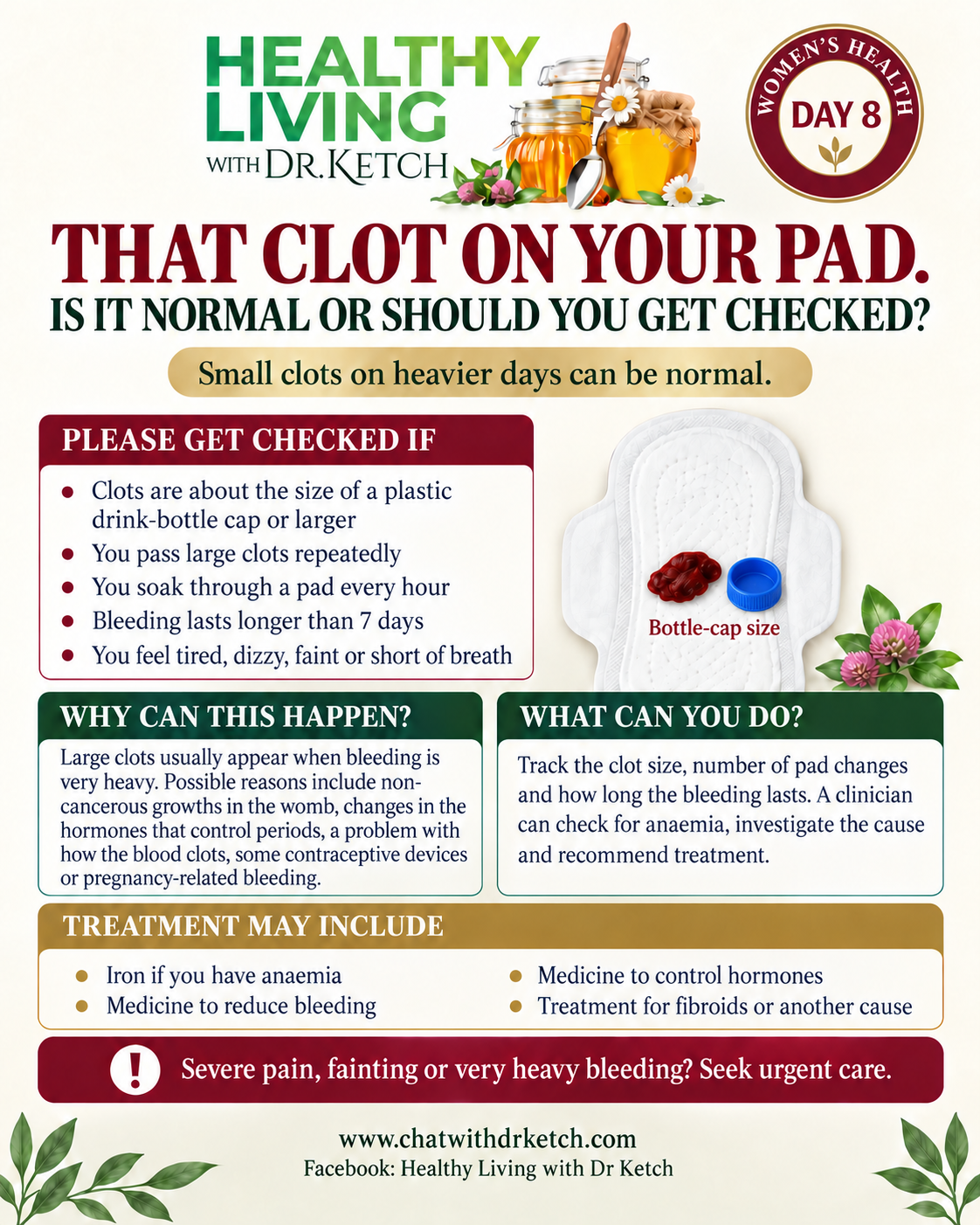
That clot on your pad looked frightening.
Before you dismiss it, compare it with the top of a plastic drink bottle.
Small clots can appear on the heavier days of a period. A plastic drink-bottle cap is slightly wider than 2.5 cm, so it provides a practical guide at home.
If your clots are about that size or larger, especially if you pass them repeatedly, please get checked.
Also speak with a doctor if you soak through a pad every hour, bleed for longer than seven days or regularly bleed through your clothes or bedding.
Feeling tired, dizzy, faint or short of breath may mean that the bleeding has caused anaemia.
Why can this happen?
Fibroids are non-cancerous growths in the womb that can cause heavier bleeding.
Adenomyosis happens when tissue similar to the womb lining grows into the muscular wall of the womb.
Changes in the hormones that control your periods can also make the womb lining become thicker and produce heavier bleeding.
Some women have conditions that make it harder for their blood to clot normally. A copper contraceptive device may also make periods heavier.
If pregnancy is possible, do not assume the bleeding is an ordinary period. Bleeding with clots needs prompt medical assessment.
Treatment depends on the cause. Your doctor may check your blood level for anaemia and arrange further tests. Treatment may include iron, medicine to reduce the bleeding, hormonal treatment or treatment for fibroids or another underlying condition.
A bottle cap is only a rough guide. One clot does not tell the whole story. How often it happens and how heavily you are bleeding are equally as important.
Save this poster so you know what to look for during your next period.


