
“Doctor… my underwear keeps getting wet.”
Is it normal pregnancy discharge…or could my waters be leaking?
It’s one of the scariest questions an expectant mum can face.
The good news is that not every watery discharge means your waters have broken but knowing the difference could make all the difference for you and your baby.
In today’s post, you’ll learn:
How to tell urine, normal vaginal discharge and amniotic fluid apart
The warning signs that mean you should go to the hospital immediately
Why leaking amniotic fluid before 37 weeks needs urgent attention
And what your doctor may do to confirm the diagnosis.
If you’re pregnant or know someone who is this is one post worth saving and sharing.
Q: Good day Ma’am. I’m 27weeks pregnant with my first. For the past 1week, I’ve been noticing a white/milky watery discharge with no smell. I’m confused because I’ve heard many stories of leaking amniotic fluid (which I learnt is dangerous). Is this normal & please what can I do about it? I’m anxiously waiting for your reply. Thanks
A: Thanks for writing in dear.
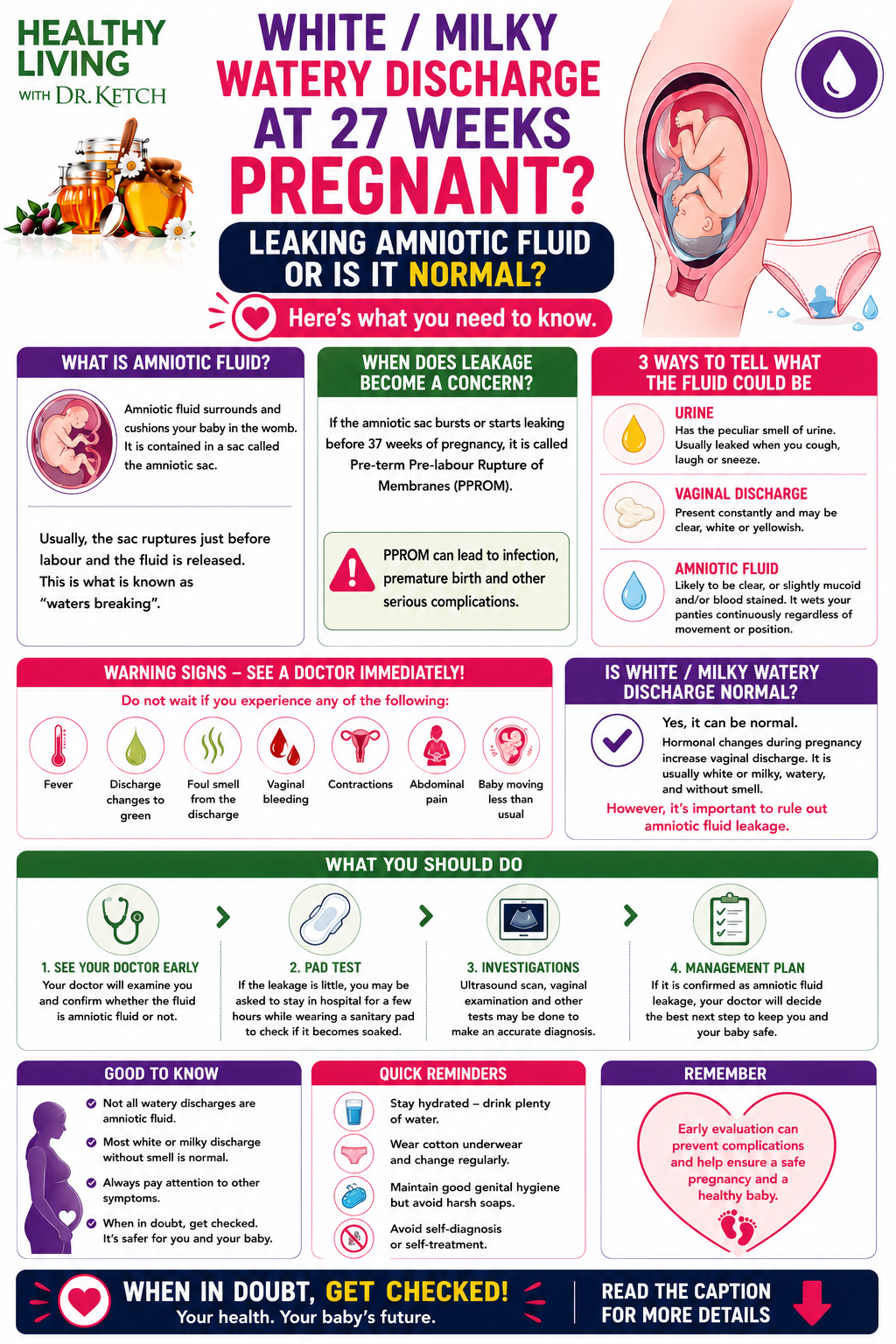
Amniotic fluid is the fluid that surrounds and cushions a baby while in the womb. The fluid is contained within a sac called the amniotic sac. Usually just before a woman goes into labour, this sac ruptures and the fluid is released…that’s what is referred to waters breaking.
When I had my last baby, my waters broke right in the hospital reception! And so, there was I with water all over my legs and people in the reception area watching  It wasn’t quite funny on that day! But I digress…
Sometimes, this sac of fluid bursts or it could start leaking very gradually before the pregnancy is 37 weeks. This is called Pre-term Pre-labour Rupture Of Membranes (PPROM)
Question is whether what is leaking is urine, amniotic fluid or vaginal discharge.
Here are some tips to help you know:
If it’s urine, it has the peculiar smell of urine and is usually leaked when one coughs, laughs or sneezes.
If it’s vaginal discharge, it’s there constantly and may be clear, white or yellowish
If it’s amniotic fluid, it’s likely to be clear, or slightly mucoid and/or blood stained and it wets panties continuously irrespective of whether one laughs or not
The most significant issues with PPROM is the danger of infection, premature birth and the dangers associated with it.
Thus, if you develop a fever, the discharge changes to green, develops a foul smell, you experience vaginal bleeding, contractions, abdominal pain or baby appears not to be moving as normal, be sure to see a doctor immediately.
So, my advice would be to see your doctor immediately so s/he can examine you and make a diagnosis.
S/he will confirm whether indeed it is amniotic fluid and then take a decision as to what step to take next. If the leakage is little, you may be asked to stay in hospital for a few hours while wearing a sanitary pad to check for whether it becomes soaked. An ultra sound scan, vaginal exam etc are also useful in making a diagnosis.


